


What's Happening?
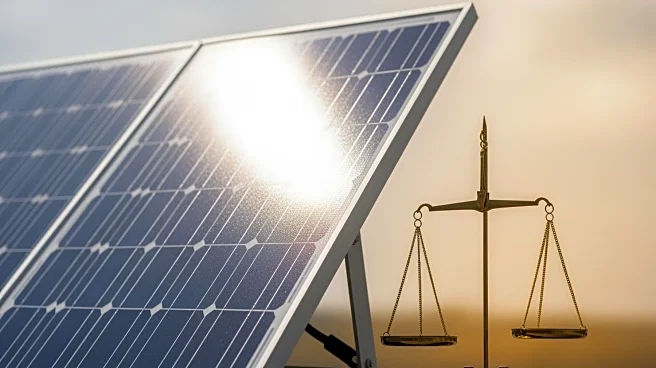
The U.S. Commerce Department has announced countervailing duties of up to 126% on solar imports from India, Indonesia, and Laos, citing unfair government subsidies that harm American manufacturers. This decision follows a petition by the Alliance for
American Solar Manufacturing and Trade, which includes companies like Hanwha Qcells and First Solar. The duties are part of a broader effort to protect domestic solar manufacturing investments. The preliminary findings set specific subsidy rates for companies such as India's Mundra Solar and Indonesia's PT Blue Sky Solar. This move is expected to reshape global solar supply chains, following previous tariffs that reduced imports from other Asian countries.
Why It's Important?
The imposition of high countervailing duties on solar imports from India and other countries highlights the U.S. government's commitment to supporting domestic solar manufacturing. By addressing concerns over foreign subsidies, the U.S. aims to level the playing field for American producers and encourage local investment in solar technology. However, these duties could lead to increased costs for solar products in the U.S., potentially affecting the growth of the renewable energy sector. The decision also underscores the ongoing trade tensions between the U.S. and its trading partners, which could have broader implications for international trade relations.
What's Next?
The Commerce Department is expected to issue a second ruling next month on whether exporters sold products in the U.S. at prices below production costs, known as anti-dumping. This upcoming decision will further influence the solar market and international trade dynamics. Affected countries may seek to negotiate with the U.S. or challenge the duties through international trade bodies. The outcome of these developments will be crucial for the future of global solar supply chains and the U.S. renewable energy industry.