






What's Happening?
Senator Peter Welch announced on Tuesday that the Vermont Agency of Transportation will receive $20 million in new federal funding. This allocation is specifically designated to support recovery efforts following severe flooding events that occurred in July
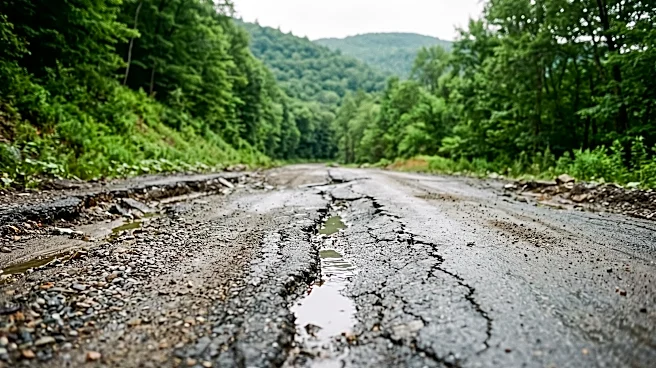
2023 and July 2024. According to Welch’s office, the funds are intended to address damage to transportation infrastructure and property losses across 11 counties within Vermont. The announcement highlights a significant federal commitment to assist the state in rebuilding and repairing critical infrastructure affected by these natural disasters. The funding aims to mitigate the long-term impacts of the floods on Vermont's transportation network and affected communities.
Why It's Important?
This federal funding is crucial for Vermont, a state that has experienced significant disruption and damage from recent severe flooding. The allocation of $20 million directly addresses the financial burden of repairing essential transportation infrastructure, which is vital for economic activity, emergency services, and daily life in the affected counties. Without such federal assistance, the state and local governments would face immense challenges in funding these extensive repairs, potentially leading to prolonged infrastructure issues and economic stagnation. The investment underscores the federal government's role in disaster recovery and its commitment to supporting states in their efforts to rebuild and enhance resilience against future natural calamities. This funding will help restore critical links, ensuring that communities can recover and resume normal operations.
What's Next?
The Vermont Agency of Transportation will now proceed with utilizing the $20 million in federal funding to initiate and complete recovery projects across the 11 affected counties. This will likely involve detailed assessments of the remaining damage, prioritization of repair work, and the allocation of funds to specific infrastructure projects. Communities receiving funding will begin to see tangible progress in the repair of roads, bridges, and other transportation assets. The focus will be on not only restoring the damaged infrastructure but also potentially implementing measures to make it more resilient to future flooding events. Stakeholders, including local governments and residents, will be closely monitoring the progress of these recovery efforts.
Beyond the Headlines
The recurring severe flooding in Vermont, necessitating significant federal aid, points to broader implications concerning climate change and infrastructure resilience in the United States. The need for substantial recovery funding highlights the increasing frequency and intensity of extreme weather events, which place immense strain on state and federal resources. This situation prompts a deeper conversation about long-term strategies for climate adaptation, including investing in more robust and climate-resilient infrastructure designs. It also underscores the importance of federal-state partnerships in addressing the consequences of environmental shifts and ensuring the safety and stability of communities. The ongoing recovery efforts in Vermont could serve as a case study for other regions facing similar challenges, emphasizing the need for proactive planning and sustained investment in climate resilience.