

What's Happening?
NASA has announced a delay in the launch of its Artemis II lunar mission, initially scheduled for February 2026, due to technical issues discovered during pre-launch testing. The mission, which aims to send a crew of four astronauts on a lunar fly-by,
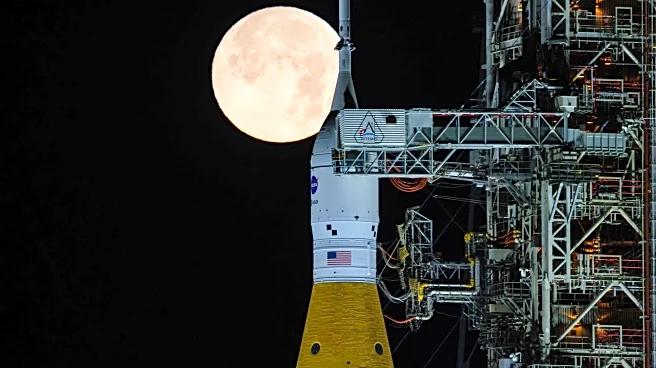
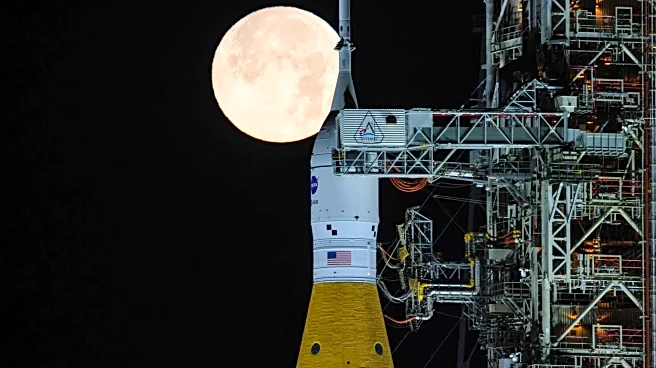
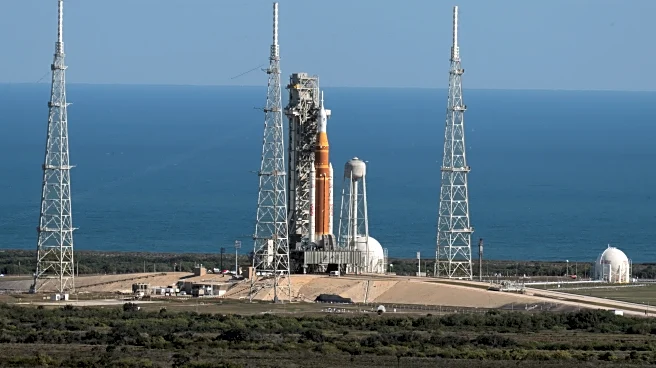
encountered problems during a 'wet dress rehearsal' at the Kennedy Space Center. A hydrogen leak was detected as the team began fueling the Space Launch System (SLS) rocket, which uses super-chilled hydrogen as fuel. Additional issues included a valve problem in the Orion capsule and communication dropouts. The mission is now tentatively rescheduled for March 2026.
Why It's Important?
The delay of the Artemis II mission is significant as it represents NASA's first crewed mission to the Moon in over 50 years, marking a critical step in the agency's broader Artemis program aimed at lunar exploration. The mission's success is crucial for testing key systems of the Orion spacecraft, which will be used in future missions, including the planned Artemis III mission that aims to land humans on the lunar surface. The delay underscores the challenges of space exploration and the importance of ensuring safety and reliability in space missions.
What's Next?
NASA plans to conduct another wet dress rehearsal to address the issues identified before proceeding with the launch. The crew, consisting of three NASA astronauts and one Canadian astronaut, will remain in Houston, Texas, until the next launch attempt. They will re-enter quarantine two weeks before the new launch date and travel to the Kennedy Space Center six days prior to liftoff. The earliest possible launch window is March 6, with additional opportunities later in the month.