







What's Happening?
The Minnesota Department of Agriculture has awarded grants to a number of beginning farmers across the state. These grants are designed to support farmers in their first ten years of operation. Among the recipients, Melissa Carlson from Marshall County
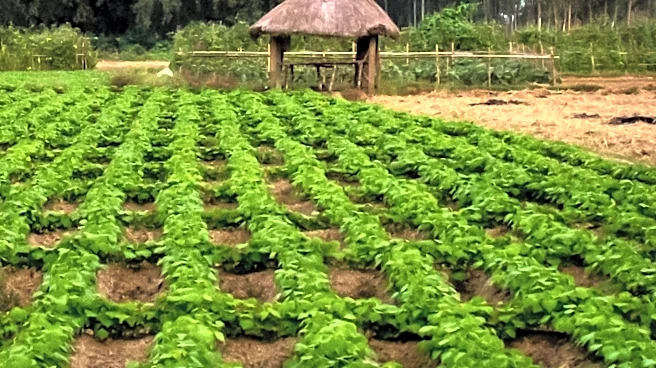
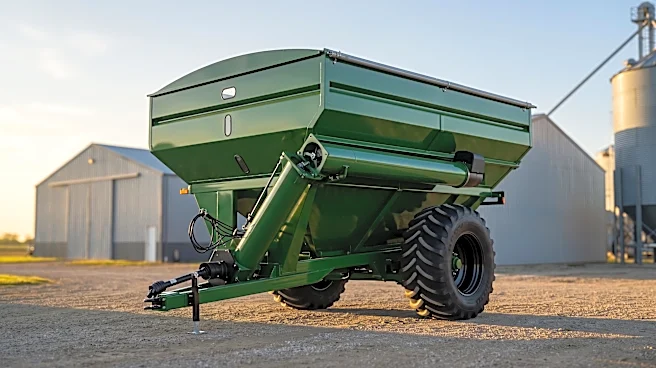
received nearly $7,500 for improvements to a high tunnel production system and poultry infrastructure. Other grants included Gareth Spears-Thomas of Clearwater County, who received almost $6,700 for welded pipe fencing for livestock production, and Casey Schmit from Polk County, who was awarded $9,000 for a grain cart. Anton Budziszewski, also from Marshall County, received $10,000 for an air drill for no-till planting. The Minnesota Department of Agriculture reported receiving 520 eligible applications for this round of grants.
Why It's Important?
These grants from the Minnesota Department of Agriculture are crucial for fostering the next generation of farmers in the U.S., particularly in a state with a significant agricultural economy. By providing financial assistance for essential infrastructure and equipment, the grants help beginning farmers overcome initial capital barriers, which are often a major challenge in establishing a successful farm. The specific allocation for poultry infrastructure improvements, as received by Melissa Carlson, highlights the growing importance of diversified farming operations and local food systems. Supporting new farmers contributes to food security, rural economic development, and the adoption of sustainable agricultural practices like no-till planting. This initiative helps ensure the continuity and innovation of the agricultural sector in Minnesota and serves as a model for other states facing similar challenges in attracting and retaining new farmers.
What's Next?
The awarded grants will enable these beginning farmers to implement their planned improvements and investments, which are expected to enhance their operational efficiency and productivity. For Melissa Carlson, the funding for poultry infrastructure will likely lead to expanded or more efficient poultry production. The success of these grant recipients could encourage more aspiring farmers to enter the agricultural sector and apply for future funding rounds. The Minnesota Department of Agriculture will likely continue to offer similar grant programs, given the high number of eligible applications received. Other states may also look to Minnesota's program as a successful model for supporting beginning farmers, potentially leading to similar initiatives across the U.S. to strengthen the agricultural workforce and promote sustainable farming practices.
Beyond the Headlines
The Minnesota Department of Agriculture's grant program for beginning farmers touches upon deeper issues facing U.S. agriculture, including an aging farmer population and the increasing difficulty for new entrants to acquire land and capital. By directly addressing these challenges, the program not only supports individual farmers but also contributes to the long-term resilience and sustainability of the agricultural landscape. The investment in diverse farming practices, such as high tunnel production and poultry infrastructure, reflects a broader trend towards localized food systems and direct-to-consumer markets, which can offer greater economic stability for small and medium-sized farms. This initiative also underscores the importance of state-level policies in shaping the future of agriculture, demonstrating how targeted support can cultivate innovation and ensure a vibrant farming community for generations to come.