







What's Happening?
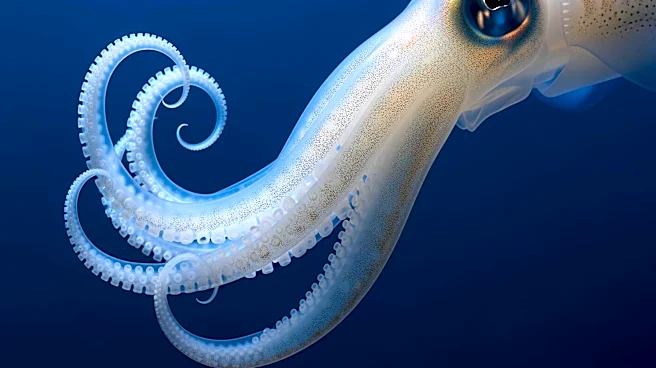
Researchers from Curtin University in Australia have discovered DNA traces of the giant squid, Architeuthis dux, off the coast of Western Australia. This finding, published in the journal Environmental DNA, marks the first record of the giant squid in this region
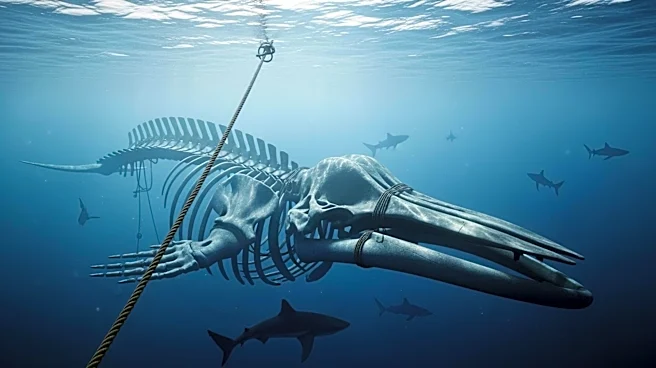
using environmental DNA (eDNA) protocols. The study involved sampling over 1,700 liters of seawater from the underwater canyons off the Ningaloo Coast. In addition to the giant squid, the team detected DNA from other rare species such as Cuvier’s beaked whale and the pygmy sperm whale. The research also uncovered DNA from species not previously known to inhabit these waters, including the sleeper shark and the faceless cusk eel. The study highlights the vast and largely unexplored biodiversity of deep-sea environments.
Why It's Important?
The discovery of giant squid DNA in Western Australian waters underscores the potential of eDNA technology in marine research. This method allows scientists to study elusive and deep-sea species without disturbing their natural habitats. The findings suggest that there is a significant amount of undiscovered biodiversity in the ocean, which could have implications for conservation efforts and our understanding of marine ecosystems. The presence of previously unrecorded species in the area also raises questions about the migration patterns and habitat ranges of these creatures, which could be influenced by environmental changes.
What's Next?
The research team plans to continue using eDNA to explore other regions of the ocean, potentially uncovering more unknown species. This approach could lead to a better understanding of marine biodiversity and inform conservation strategies. The findings may also prompt further studies into the environmental factors that allow such diverse species to thrive in these waters. As the technology and methods improve, eDNA could become a standard tool in marine biology, offering new insights into the complex ecosystems of the deep sea.