









What's Happening?
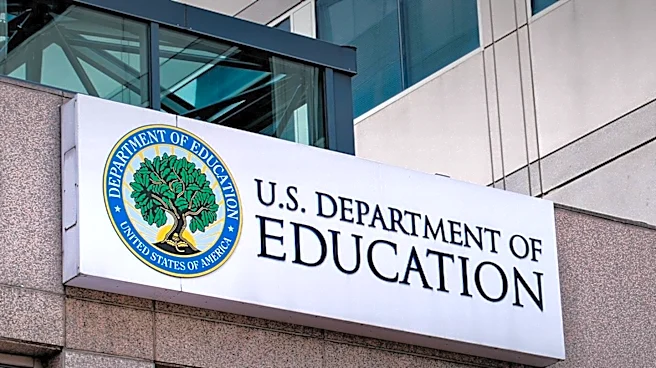
A federal judge has temporarily blocked a rule from the Trump administration that imposed lower federal student loan limits on certain graduate programs, including nursing. The U.S. Education Department has responded by issuing a revised rule that expands
the list of 'professional' degree programs eligible for higher loan amounts. This change comes after eight groups, representing various professional fields, challenged the original rule in court. The revised rule now includes degrees in nursing, physical therapy, and other fields, allowing students in these programs to access higher loan limits. However, the rule also reclassifies some degrees, such as theology, as non-professional, subjecting them to lower loan caps. The department plans to continue defending the original rule in court.
Why It's Important?
This development is significant as it affects the financial accessibility of graduate education for many students in the U.S. By expanding the list of professional degrees eligible for higher loan limits, the ruling provides temporary relief to students in high-cost programs like nursing and physical therapy. The decision could impact the future of student loan policies and the financial strategies of educational institutions. It also highlights ongoing debates about student debt and the classification of professional degrees, which could influence future policy decisions and legal interpretations.
What's Next?
The Education Department intends to continue its legal battle to uphold the original rule, which could lead to further changes in student loan policies. The temporary rule will remain in effect during the ongoing litigation, but the outcome of the case could alter the landscape of federal student loan limits. Stakeholders, including educational institutions and student advocacy groups, are likely to monitor the situation closely, as the final decision could have long-term implications for graduate education funding.