




What's Happening?
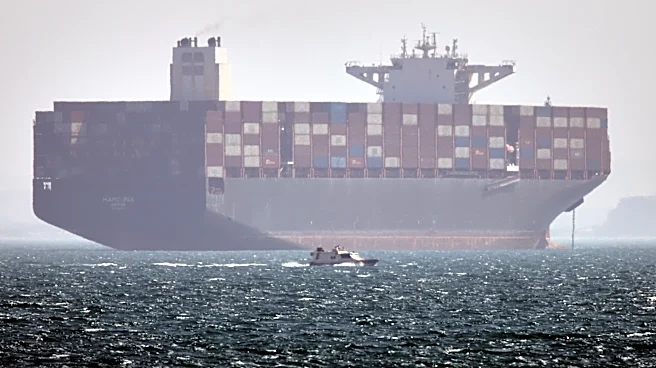
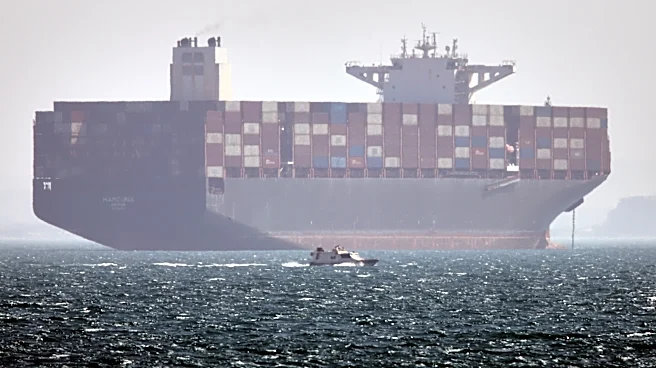
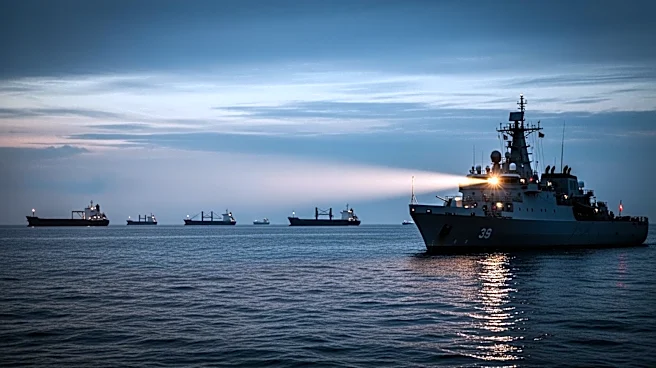
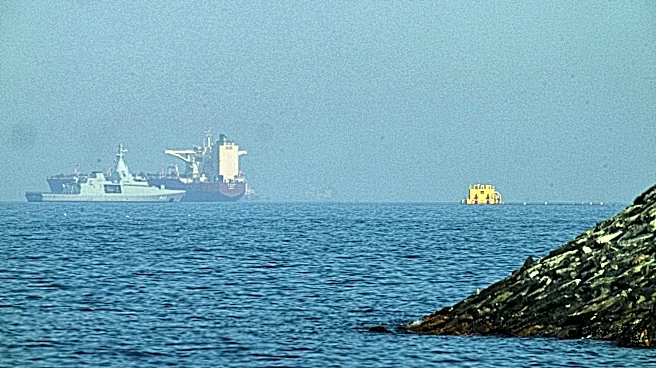
President Trump announced that the United States will begin an initiative to guide stranded ships from the Strait of Hormuz starting Monday. This effort aims to assist hundreds of vessels and approximately 20,000 seafarers affected by Iran's blockade,
which was imposed following the U.S. and Israel's initiation of war on February 28. Trump stated that 'neutral and innocent' countries have been impacted and emphasized the humanitarian nature of the U.S. action. The blockade has significantly disrupted global markets, with many ships, including oil and gas tankers, stuck in the Persian Gulf. Crew members have reported shortages of essential supplies. Trump warned that any interference with this humanitarian process would be met with force. Meanwhile, Iran is reviewing a U.S. response to its proposal to end the war, which includes lifting sanctions and ceasing hostilities.
Why It's Important?
The U.S. initiative to guide ships out of the Strait of Hormuz is crucial for maintaining global trade routes, particularly for oil and gas, which are vital to the world economy. The blockade has already caused significant disruptions, and the U.S. action could help stabilize markets by ensuring the free passage of goods. This move also highlights the geopolitical tensions in the region, with the U.S. and Iran at odds over military and economic issues. The humanitarian aspect of the initiative underscores the broader impact of the conflict on international shipping and trade, affecting countries far beyond the immediate region.
What's Next?
The success of the U.S. initiative will depend on Iran's response and the international community's support. If Iran perceives the action as a threat, it could escalate tensions further. Conversely, if the initiative leads to successful negotiations, it might pave the way for easing the blockade and potentially resolving broader conflicts. The situation remains fluid, with potential implications for U.S.-Iran relations and regional stability.