



What's Happening?
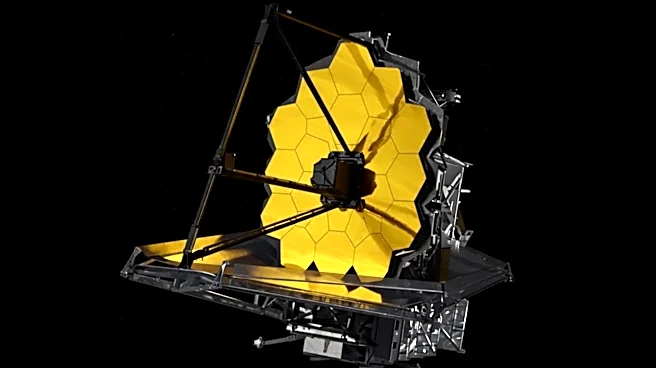
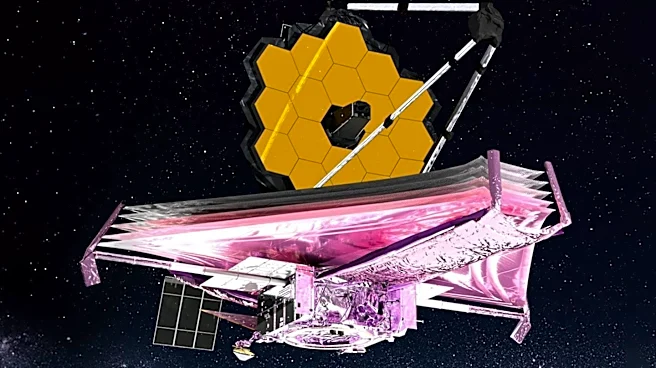
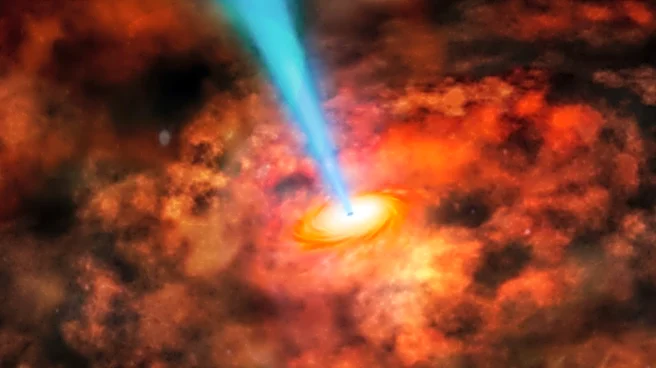
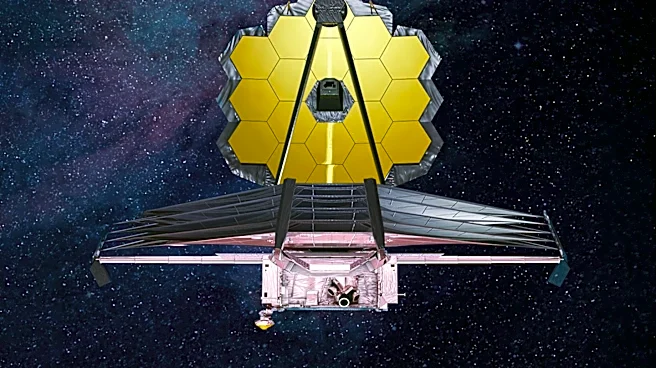
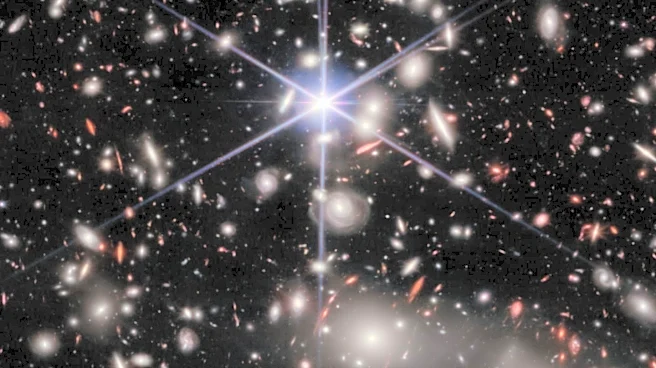
Recent observations by the James Webb Space Telescope (JWST) have revealed a higher-than-expected number of rapidly growing black holes in the early universe. These findings are challenging existing theoretical models regarding the formation of supermassive
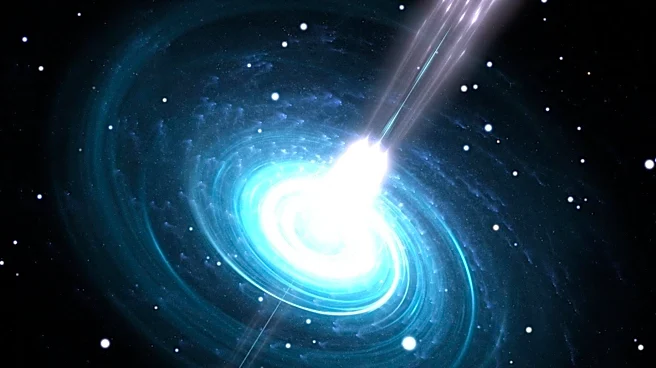
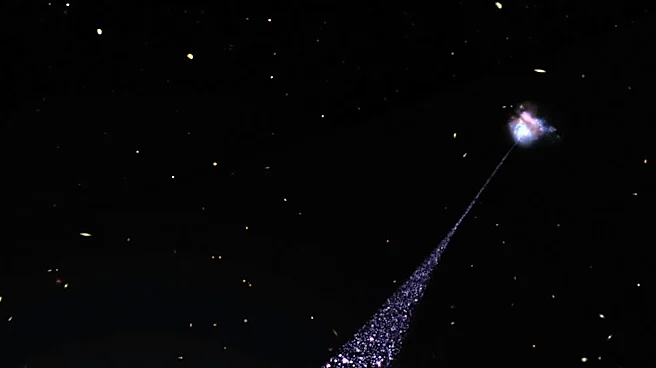
black holes, which reside at the hearts of galaxies. Scientists are currently exploring two primary theories for their origin: one suggests they formed from the remnants of the first stars, while the other proposes they arose from the direct collapse of vast gas clouds. Each pathway leaves distinct observational signatures. Sophie Koudmani is leading research that combines state-of-the-art simulations with JWST observations to better understand how these initial supermassive black holes formed. The unexpected prevalence of these rapidly growing black holes in the early universe necessitates a re-evaluation of current astrophysical understanding.
Why It's Important?
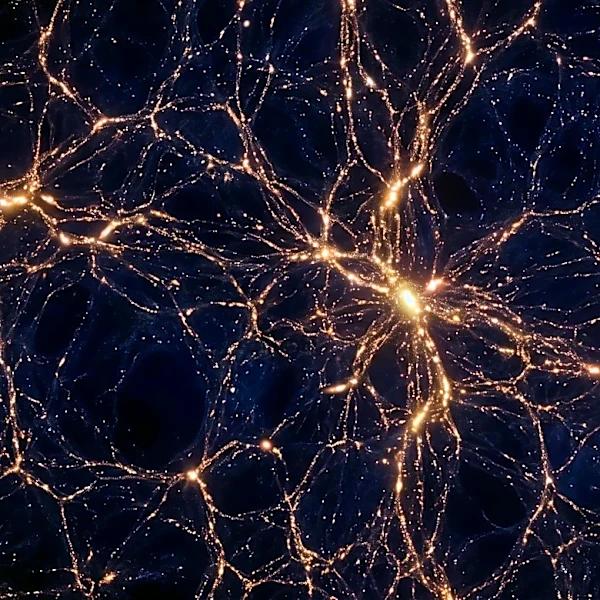
The formation of supermassive black holes is a fundamental question in astrophysics, directly impacting our understanding of galaxy evolution and the structure of the universe. If current models are insufficient to explain the JWST observations, it implies a significant gap in our knowledge of the early universe's conditions and processes. This could lead to a paradigm shift in how scientists conceptualize the initial stages of cosmic development. Understanding these origins is crucial for accurately modeling the growth and distribution of galaxies, as supermassive black holes are intrinsically linked to their host galaxies' development. The implications extend to cosmological theories, potentially requiring adjustments to our understanding of dark matter and dark energy's roles in early cosmic structures.
What's Next?
Researchers like Sophie Koudmani will continue to integrate advanced simulations with the new data from the JWST to refine and potentially revise the theoretical models of supermassive black hole formation. Future observations from the JWST and other advanced telescopes will be critical in gathering more evidence to support or refute emerging theories. The scientific community will likely engage in extensive discussions and new research initiatives to reconcile the observational data with theoretical predictions. This ongoing research aims to pinpoint the exact mechanisms that led to the rapid growth of black holes in the early universe, potentially leading to a more complete picture of cosmic evolution.
Beyond the Headlines
The challenge posed by the JWST's findings highlights the dynamic nature of scientific discovery, where new data can overturn long-held assumptions. This process underscores the importance of continuous observational astronomy and theoretical refinement. The ethical implications revolve around the scientific community's responsibility to adapt and evolve its understanding based on empirical evidence, even when it contradicts established theories. Culturally, these discoveries contribute to humanity's ongoing quest to comprehend its place in the cosmos, pushing the boundaries of knowledge and inspiring future generations of scientists. The long-term shift could be a more nuanced and complex understanding of cosmic origins, moving beyond simpler models to embrace the intricate realities of the early universe.