
What's Happening?
A rock-hewn mikveh, dating back to the final days of the Second Temple period, has been discovered beneath the Western Wall Plaza in Jerusalem. The Israel Antiquities Authority, in collaboration with the Western Wall Heritage
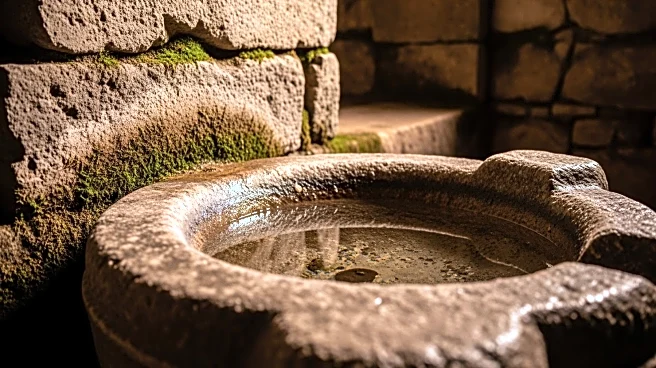
Foundation, conducted the excavation that led to this significant find. The mikveh, rectangular in shape, measures 3.05 meters in length, 1.35 meters in width, and 1.85 meters in height, and features plastered walls and four hewn steps. It was found sealed beneath a layer from the Second Temple period, dated to 70 CE, which contained burned ash and numerous pottery and stone vessels. These artifacts are characteristic of the Jewish population living in Jerusalem at the time. The discovery is located near the ancient Temple's main entrances, the Great Bridge and Robinson’s Arch, and is part of ongoing efforts to uncover Jerusalem’s historical past.
Why It's Important?
The discovery of the mikveh provides valuable insights into the religious practices and daily life in Jerusalem during the Second Temple period. It highlights the meticulous observance of ritual purity laws by the city's residents and leaders, reflecting the city's status as a Temple city. The use of stone vessels, which do not contract ritual impurity, underscores the importance of religious practices in the community. This find strengthens the understanding of the intertwined nature of religious and daily life in ancient Jerusalem. The exposure of the mikveh, with ashes from the destruction at its base, serves as a testament to the resilience and renewal of the Jewish people, moving from impurity to purity and from destruction to renewal.
What's Next?
The discovery ahead of the fast of the Tenth of Tevet emphasizes the importance of continuing archaeological excavations and research in Jerusalem. Heritage Minister Rabbi Amichai Eliyahu and Western Wall Heritage Foundation Director Mordechai Eliav have highlighted the need to preserve this historical memory for future generations. The ongoing efforts to uncover and study Jerusalem's past are expected to continue, providing further insights into the city's rich history and cultural heritage.
Beyond the Headlines
The mikveh's discovery not only sheds light on historical religious practices but also raises questions about the cultural and social dynamics of ancient Jerusalem. The meticulous observance of ritual purity laws suggests a society deeply rooted in religious traditions, influencing various aspects of daily life. The use of stone vessels, due to their halakhic significance, indicates a community that prioritized religious purity over practicality. This discovery may lead to further exploration of how religious beliefs shaped the social and economic structures of the time.