







What's Happening?
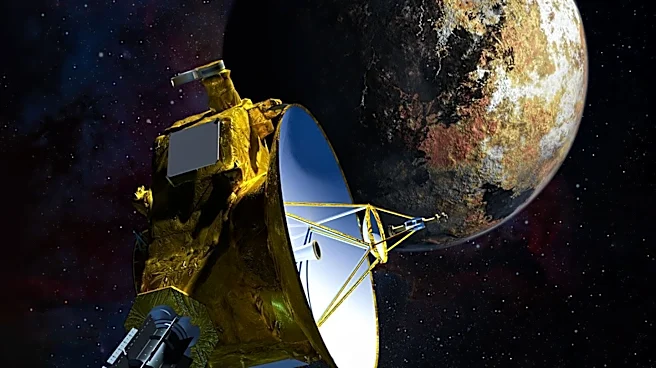
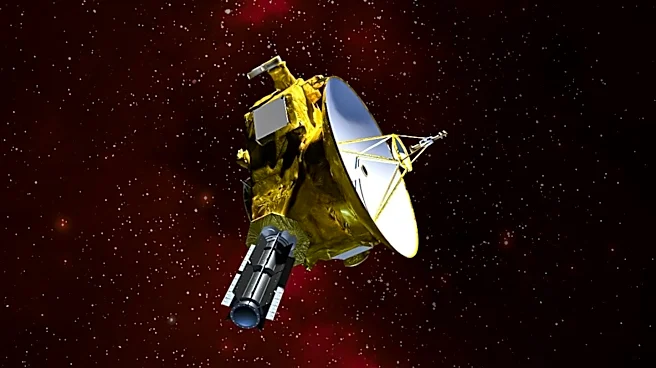
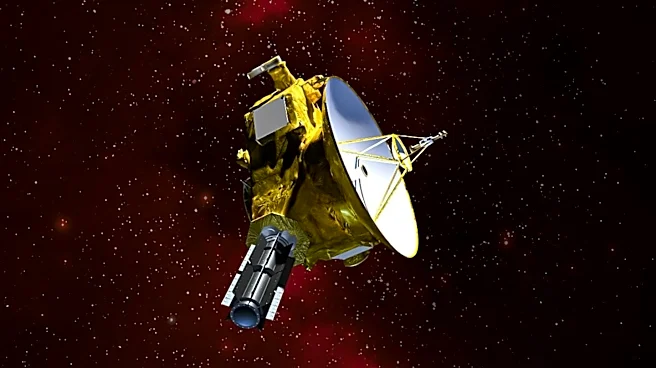
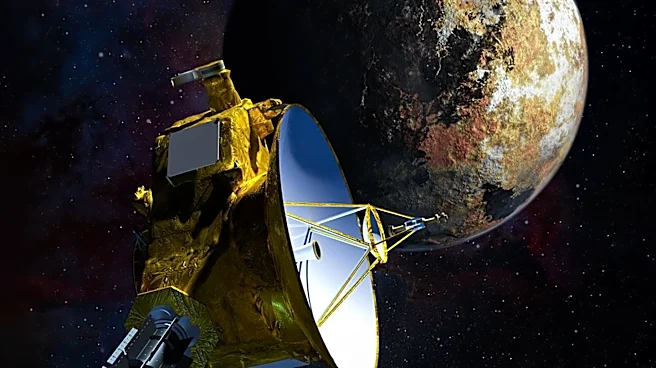
NASA's New Horizons spacecraft has been reactivated 6 billion miles from Earth, beyond Pluto's orbit, to continue its exploration of the Kuiper Belt. The spacecraft, which had been in a low-power 'hibernation' mode for 321 days, is now fully operational
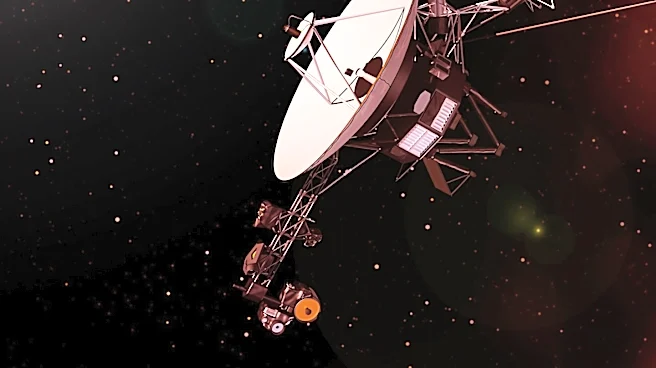
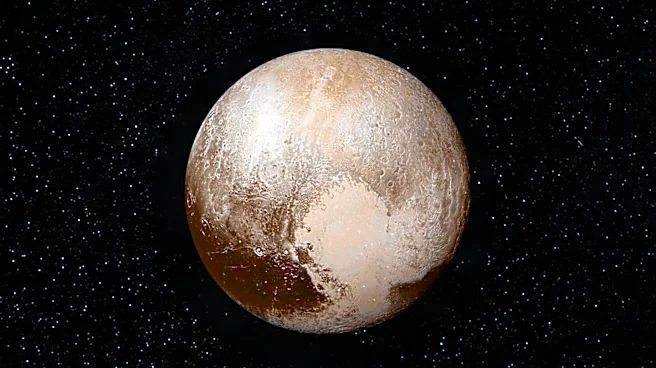
and ready to download environmental data collected during its rest period. New Horizons, known for its historic flybys of Pluto in 2015 and the snowman-shaped planetesimal Arrokoth in 2019, is now set to study the heliosphere, the boundary where the solar wind from the sun meets interstellar space. This mission aims to provide new insights into this unexplored frontier, with the spacecraft equipped with modern instruments that offer enhanced capabilities compared to earlier missions like Voyager.
Why It's Important?
The reactivation of New Horizons is significant as it continues to push the boundaries of human knowledge about the outer solar system and interstellar space. The data collected by New Horizons could offer unprecedented insights into the heliosphere, a critical area for understanding the solar system's interaction with the galaxy. This mission not only extends the scientific legacy of New Horizons but also highlights the potential for long-term space exploration missions to yield valuable data over extended periods. The findings could have implications for astrophysics and heliophysics, potentially influencing future space exploration strategies and technologies.
What's Next?
New Horizons is expected to remain operational and scientifically productive into the 2030s, depending on its power supply and NASA's management decisions. The spacecraft will soon begin a targeted experiment to measure hydrogen gas near the termination shock, the outer boundary of the heliosphere. This experiment is anticipated to provide a wealth of data for space physicists worldwide. As the mission progresses, NASA will evaluate the spacecraft's capabilities and funding to determine the feasibility of extending its operations beyond the Kuiper Belt exploration, potentially continuing its contributions to space science for years to come.