




What's Happening?
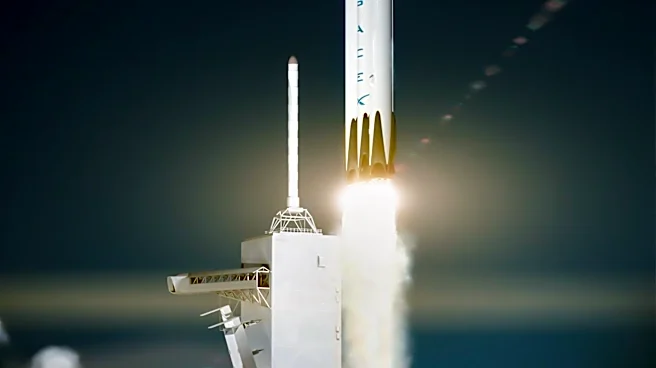
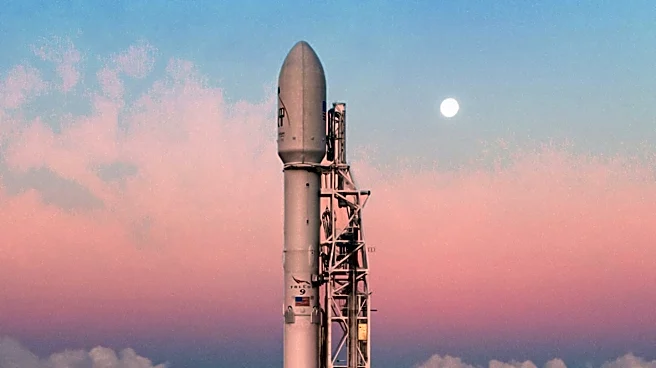
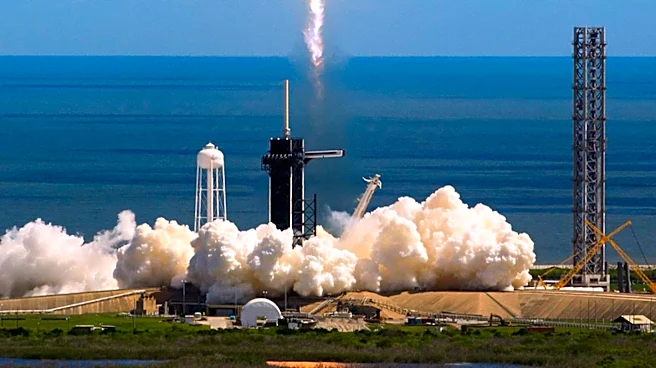
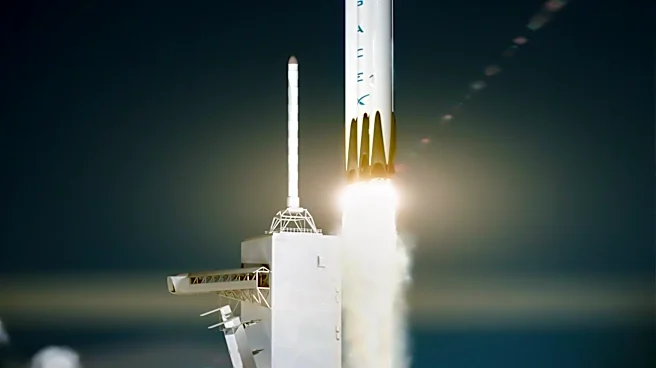
A stage of the SpaceX Falcon 9 rocket is expected to crash into the Moon near the Einstein crater. This event is scheduled to occur at 2:35 a.m. ET on Wednesday. The rocket stage, weighing approximately 8,818 pounds, was part of a mission launched in January
2025 to deliver lunar landers. While the first stage of the rocket returned to Earth, the second stage remained in space, eventually being influenced by solar activity and gravitational forces to head towards the Moon. This impact provides a unique opportunity for scientists to study the lunar surface and understand the effects of space debris on the Moon.
Why It's Important?
The impact of the SpaceX rocket stage on the Moon highlights the growing issue of space debris as lunar exploration increases. Unlike Earth, the Moon lacks an atmosphere to burn up debris, posing potential risks to future lunar missions. Understanding the impact of such debris is crucial for the safety of astronauts and infrastructure planned under NASA's Artemis program, which aims to establish a sustained human presence on the Moon. This event also underscores the need for better tracking and management of space debris beyond Earth's orbit.
What's Next?
Following the impact, scientists will analyze the resulting crater and debris plume to gain insights into the Moon's surface properties. The Korean Pathfinder Lunar Orbiter and NASA's Lunar Reconnaissance Orbiter are expected to capture images of the impact site. This data will help inform future strategies for managing space debris and protecting lunar missions. Additionally, the event may prompt discussions on international regulations for space debris management, especially as lunar exploration activities increase.