





What's Happening?
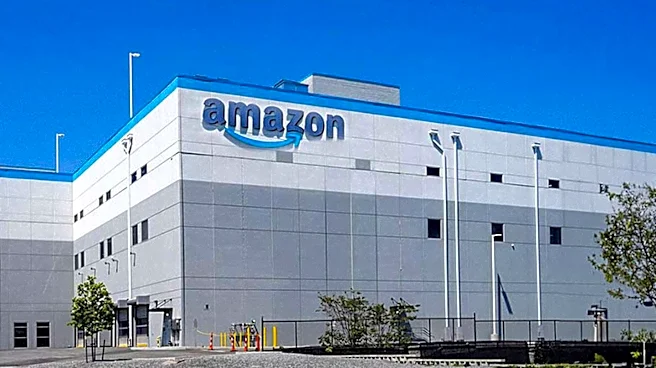
Congressman Josh Gottheimer (NJ-5) recently toured an Amazon fulfillment facility in Woodland Park, New Jersey, to observe the integration of artificial intelligence (AI) and robotics in operations. During his visit, Congressman Gottheimer engaged with
site leadership and Amazon public policy staff to discuss how these advanced technologies are transforming the facility's efficiency and the implications for the workforce in North Jersey. A key focus of the discussions was the training of employees for future jobs in an AI-driven economy. Congressman Gottheimer, who co-chairs the House Commission on Artificial Intelligence and the Innovation Economy, has been actively involved in bipartisan efforts to prepare workers for these technological shifts. He introduced the bipartisan AI Workforce Training Act alongside Congressman Mike Lawler (R-NY), a legislative proposal designed to incentivize companies to invest in AI-related training for their employees.
Why It's Important?
The visit by Congressman Gottheimer and the discussions surrounding AI and workforce training highlight a critical national issue: the adaptation of the U.S. labor force to rapidly advancing technological landscapes. The proposed AI Workforce Training Act, offering a 30 percent tax credit up to $2,500 per employee for AI training expenses, could significantly impact U.S. businesses by encouraging investment in upskilling their workforce. This initiative aims to ensure that American workers are equipped to manage, use, and build AI systems, thereby maintaining the nation's competitive edge in innovation. For small businesses, particularly those relying on large fulfillment networks like Amazon's, access to a skilled workforce capable of navigating AI-driven logistics is crucial for sustained growth and efficiency. The legislation could also mitigate potential job displacement by fostering a proactive approach to workforce development in the face of automation.
What's Next?
The bipartisan AI Workforce Training Act, introduced by Congressman Gottheimer and Congressman Lawler, will likely proceed through the legislative process, potentially undergoing committee review and debate in Congress. Its passage would create a new financial incentive for companies across various sectors to invest in AI training programs, impacting corporate budgets and human resources strategies. Businesses would need to assess how to best utilize these tax credits to develop their employees' AI competencies. Furthermore, the ongoing dialogue between lawmakers and industry leaders, exemplified by Congressman Gottheimer's visit to Amazon, suggests a continued focus on public-private partnerships to address the challenges and opportunities presented by AI. Future policy discussions may explore additional measures to support workforce adaptation and technological innovation in the U.S. economy.
Beyond the Headlines
The integration of AI and robotics, as observed at the Amazon facility, represents a broader societal shift towards automation and intelligent systems. This development raises profound questions about the future of work, the nature of human-machine collaboration, and the ethical implications of AI deployment. Beyond economic incentives, the emphasis on workforce training underscores a recognition that human capital remains central to innovation, even in highly automated environments. The bipartisan nature of the AI Workforce Training Act suggests a growing consensus across the political spectrum regarding the necessity of preparing for an AI-driven future. This legislative effort could set a precedent for how the U.S. government supports industries in adapting to technological change, potentially influencing future policies related to education, labor, and economic development in an increasingly digital world.