
What's Happening?
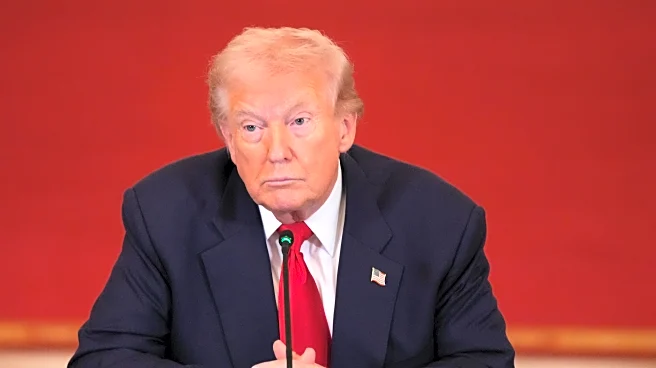
President Donald Trump hosted the 'Shield of the Americas' Summit at the Trump National Doral Miami, aiming to reinforce U.S. leadership in the Western Hemisphere. The summit, held on March 7, 2026, brought together leaders from 12 Latin American countries,
including Argentina, Bolivia, Chile, Costa Rica, the Dominican Republic, Ecuador, El Salvador, Honduras, Panama, Paraguay, and Trinidad and Tobago. The event focused on strategies to counter Chinese economic influence and strengthen regional alliances. During the summit, President Trump signed a 'Commitment to countering cartel criminal activity' document, highlighting the U.S. commitment to addressing security concerns in the region. The summit was described by the White House as a landmark event to reshape regional alliances and bolster U.S. influence.
Why It's Important?
The 'Shield of the Americas' Summit is significant as it represents a strategic move by the U.S. to reassert its influence in the Western Hemisphere amidst growing Chinese economic presence. By engaging with Latin American leaders, the U.S. aims to strengthen diplomatic and economic ties, potentially leading to increased cooperation on issues such as trade, security, and counter-narcotics efforts. The summit also underscores the U.S. commitment to addressing regional security challenges, which could have implications for U.S. foreign policy and economic interests. Strengthening alliances in the region may help the U.S. counterbalance China's Belt and Road Initiative, which has been expanding its reach in Latin America.
What's Next?
Following the summit, the U.S. is likely to pursue further diplomatic engagements and initiatives to solidify the commitments made during the event. This could involve increased economic aid, trade agreements, and security cooperation with Latin American countries. The U.S. may also focus on implementing the strategies discussed at the summit to counter cartel activities and enhance regional security. Additionally, the outcomes of the summit could influence future U.S. foreign policy decisions and shape the geopolitical landscape in the Western Hemisphere.