



What's Happening?
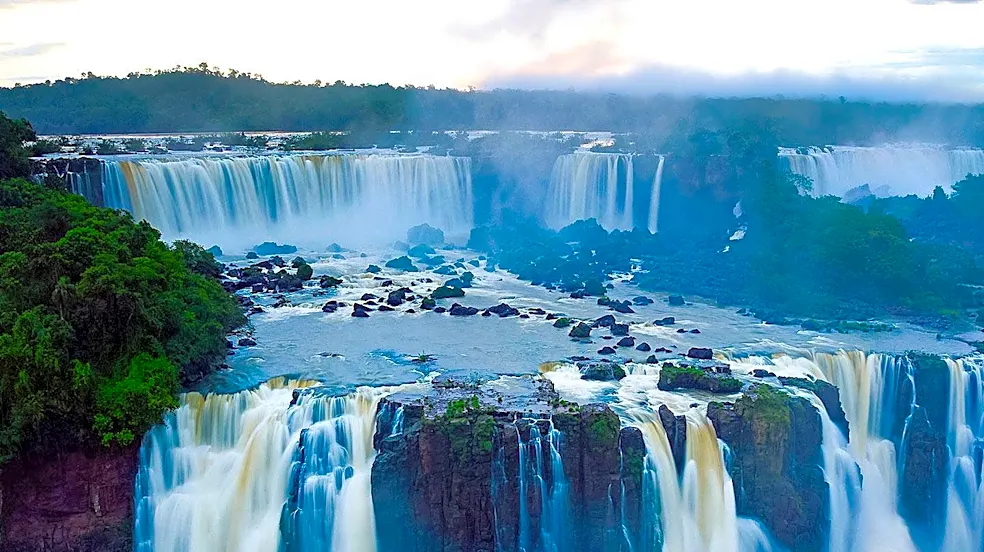
Iguazú Falls, located on the Brazil-Argentina border, is currently experiencing near-record volumes of water flow. This surge is attributed to heavy rainfall in Brazil during October, which scientists link to this year's Super El Niño phenomenon. The
complex of cascades, spanning over a mile, has seen water levels so high that officials registered nearly 12 million liters (more than 3 million gallons) of water per second tumbling over the falls, which is ten times the normal flow. The rushing, muddy waters of the Iguazú river have reached the bottom of metal catwalks that typically hover several feet above the falls, leading to the closure of these walkways for safety reasons. The director of the national park noted the continuous rainfall as the reason for the rising river levels.
Why It's Important?
The extreme weather event at Iguazú Falls highlights the significant impact of the Super El Niño phenomenon on natural environments and local infrastructure. While the immediate impact is on tourism, with lower-than-average visitor numbers despite the spectacular natural display, the broader implications extend to environmental management and climate change adaptation. The ten-fold increase in water flow demonstrates the powerful and potentially destructive forces unleashed by such climatic events. This situation underscores the need for robust infrastructure and emergency protocols in areas prone to extreme weather, especially in regions that rely on natural attractions for their economy. The event serves as a tangible example of how global climate patterns can manifest in dramatic local changes, affecting both ecological systems and human activities.
What's Next?
As long as the heavy rains linked to the Super El Niño continue, the high water levels at Iguazú Falls are expected to persist, keeping the walkways closed. Authorities will likely monitor the weather patterns closely and assess the structural integrity of the tourist infrastructure once water levels recede. The long-term implications could involve re-evaluating and reinforcing existing structures to withstand future extreme weather events, which are predicted to become more frequent and intense due to climate change. Local tourism boards may need to adapt their strategies to account for periods of reduced accessibility or altered visitor experiences. Furthermore, scientists will continue to study the specific impacts of this Super El Niño on regional hydrology and ecosystems to better predict and prepare for similar occurrences.
Beyond the Headlines
The dramatic scenes at Iguazú Falls offer a stark visual representation of the broader challenges posed by climate change and extreme weather events. Beyond the immediate impact on tourism and infrastructure, such events can have profound ecological consequences, altering riverine habitats, affecting biodiversity, and potentially leading to increased erosion and sedimentation. The closure of walkways and the disruption to visitor experiences also touch upon the delicate balance between human interaction with natural wonders and the imperative to protect these environments. This event could prompt deeper discussions among policymakers and environmental organizations about sustainable tourism practices, climate resilience, and the urgent need for global cooperation in addressing the root causes of climate change. It also serves as a reminder of nature's immense power and unpredictability, even in well-managed natural parks.