


What's Happening?
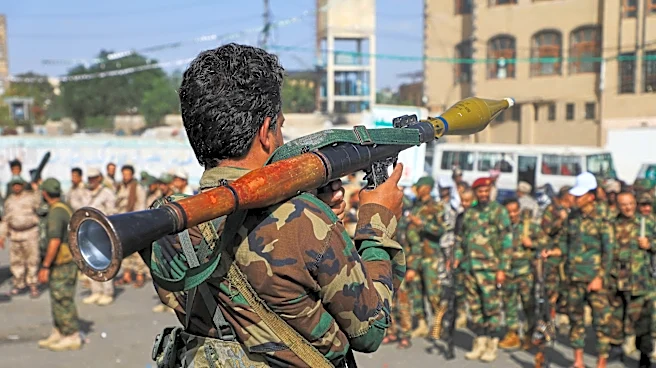
Members of the Vermont National Guard have returned home from an eight-month deployment to the Middle East, where they participated in the war in Iran. This deployment followed an initial assignment to Puerto Rico to support federal actions in Venezuela.
Both Democratic Senator Peter Welch and Independent U.S. Senator Bernie Sanders expressed relief at the Guard's return but strongly criticized the war in Iran. Senator Welch stated that the Guard should not have been sent to the war zone in the first place and noted that the return of the airmen does not necessarily signal a winding down of hostilities by the federal government. Senator Sanders echoed these sentiments, calling the war unconstitutional and illegal, highlighting its negative impact on the economy and the thousands of lives lost. He also praised the courage of the Guard members, who faced harsh conditions and re-supply challenges during what was the longest-ever deployment for the Vermont National Guard.
Why It's Important?
The return of the Vermont National Guard from Iran and the accompanying criticism from Senators Welch and Sanders underscore a significant political and social tension regarding U.S. military engagements. The senators' strong condemnation of the war as 'unconstitutional' and 'illegal' reflects a broader debate within Congress and the public about the executive branch's authority in deploying military forces without explicit congressional declarations of war. Their remarks also highlight the human cost of such deployments, emphasizing the abrupt removal of service members from their homes, the harsh conditions they face, and the strain on their families. Furthermore, Senator Sanders' mention of the war's 'terrible impact on our economy' points to the financial burden of prolonged conflicts. This event is important as it brings to the forefront the ongoing discussion about the rationale, legality, and consequences of U.S. military interventions, particularly when they involve National Guard units whose primary role is often domestic support.
What's Next?
The return of the Vermont National Guard members will likely involve a period of reintegration for the service members and their families. While the immediate focus will be on their well-being, the political statements from Senators Welch and Sanders suggest continued congressional scrutiny of the war in Iran. Senator Welch's comment that the return does not indicate a change in presidential policy implies that the debate over the war's continuation will persist. This could lead to further legislative efforts to limit presidential war powers or to demand greater accountability for military deployments. The senators' call for Republican colleagues to 'stand up to the president' indicates a desire for bipartisan action to end the conflict. The long-term impact on the Vermont National Guard, particularly concerning future deployments and resource allocation, will also be a key area to watch, especially given the challenges faced during this deployment.
Beyond the Headlines
The return of the Vermont National Guard from Iran, coupled with the strong political statements from Senators Welch and Sanders, delves into the deeper ethical and constitutional questions surrounding U.S. foreign policy and military engagement. The senators' characterization of the war as 'unconstitutional' and 'illegal' challenges the very foundation of the conflict, raising fundamental questions about democratic oversight of military actions. This situation also highlights the unique position of the National Guard, whose members often balance civilian lives with military duties, making prolonged and distant deployments particularly impactful on their communities and families. The criticism of re-supply issues during the deployment further points to potential systemic challenges within military logistics and support for deployed units. This event serves as a poignant reminder of the ongoing tension between national security imperatives, the well-being of service members, and the democratic principles that govern the use of military force, prompting a re-evaluation of how the U.S. engages in international conflicts.