


What's Happening?
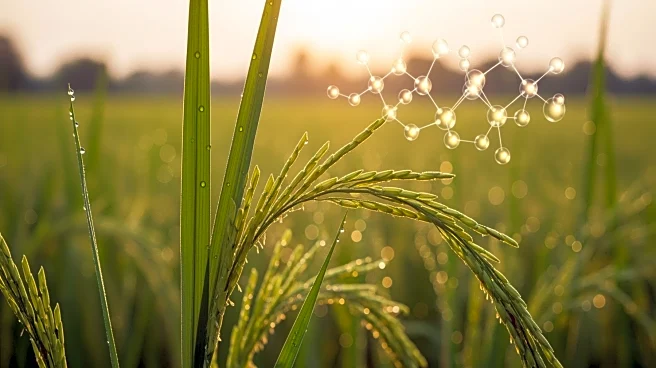
Recent developments in molecular engineering are enhancing the resilience of rice crops to heat stress, a critical issue as global temperatures rise. Researchers have introduced heat shock elements into the promoter of the rice gene GIF1, increasing the seed-setting
rate by 10.5% under heat stress. This genetic modification improves the plant's ability to transport sugars into its grains, addressing the problem of chalky grains caused by high temperatures. The discovery of the QT12 gene, a negative regulator of grain quality, offers breeders a target to improve grain quality under heat stress. These innovations are part of a broader effort to develop climate-resilient crop varieties, crucial for maintaining food security as agricultural yields struggle to meet rising demand.
Why It's Important?
The advancements in rice crop resilience are significant for global food security, particularly as the demand for staple crops like rice, wheat, and maize continues to grow. With agricultural yields failing to keep pace with demand, these innovations could help bridge the gap, ensuring a stable food supply. The ability to maintain grain quality and yield under heat stress is vital for regions heavily reliant on rice production. Moreover, these developments could serve as a model for other crops, potentially transforming agricultural practices worldwide and mitigating the impacts of climate change on food production.
What's Next?
The next steps involve scaling these innovations to address the yield penalties associated with high temperatures. This includes using geospatial modeling to monitor heat hotspots and deploying climate-smart crop varieties strategically. Speed-breeding tools are also being utilized to accelerate the development of next-generation cultivars. As these technologies are implemented, they could significantly enhance the resilience of global food systems, ensuring a sustainable supply of staple crops in the face of climate change.