



What's Happening?
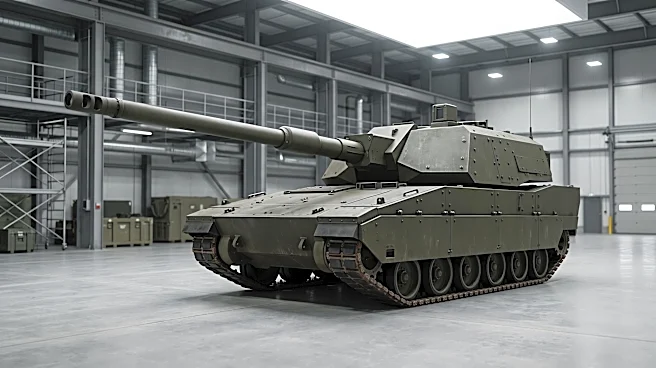
The U.S. Army's XM2001 Crusader howitzer program, a project designed to create the most advanced self-propelled gun on Earth, was terminated in May 2002 by then-Secretary of Defense Donald Rumsfeld. The program had already cost approximately $2 billion,
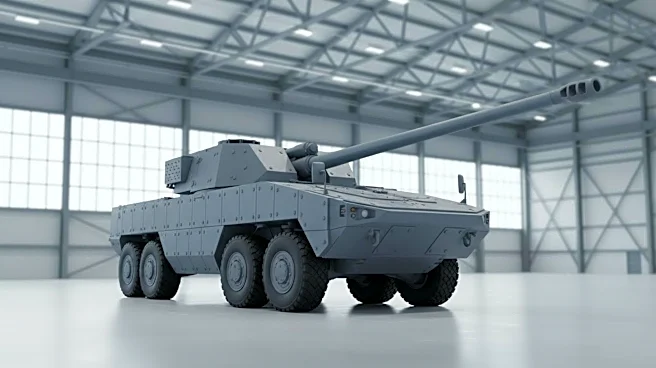
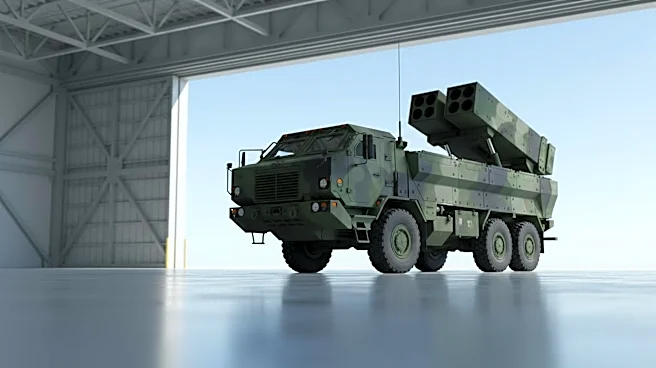
with an estimated total cost of $11 billion or more. Only one prototype of the Crusader was ever built. The Crusader was envisioned as a fully automated 155mm howitzer capable of firing 12 rounds per minute and landing eight shells on a single target simultaneously, while maintaining pace with an armored corps. Its termination was part of Rumsfeld's broader initiative, directed by President Bush, to modernize the military by skipping a generation of weaponry and focusing on lighter, faster, and more deployable forces, particularly after the September 11 attacks. The decision sparked significant internal conflict within the Pentagon, leading to an inspector general's investigation and the resignation of an Army official.
Why It's Important?
The termination of the Crusader program represents a pivotal moment in U.S. military procurement and strategic thinking. It highlighted a fundamental shift in defense priorities from heavy, massed artillery to more agile, precision-focused capabilities, influenced by the lessons of conflicts like Afghanistan. The controversy surrounding its cancellation underscored the tension between traditional military branches advocating for established systems and Pentagon leadership pushing for transformative change. The program's demise also left the Army without a direct replacement for its aging M109 howitzer, which the Crusader was intended to retire. Despite the significant investment, the Crusader's weight and logistical demands, particularly its inability to be easily airlifted, clashed with the new vision of rapid deployment. This decision has had lasting implications, as subsequent attempts to replace the M109 have also failed, leaving the Paladin, a system the Crusader was meant to supersede, still in service today.
What's Next?
Following the Crusader's termination, the U.S. Army redirected its efforts and savings towards the Future Combat Systems (FCS) vision, focusing on lighter, networked vehicles. While the FCS program was also eventually canceled, some of the Crusader's automation technology was incorporated into its howitzer component, the NLOS-C, and later into the M109A7 Paladin. The Army has since made three more unsuccessful attempts to replace its self-propelled howitzer and is currently on its fourth attempt, the Self-Propelled Howitzer Modernization effort. This initiative is soliciting mature, fieldable systems, including foreign guns, and has entered into demonstration contracts with various manufacturers. The ongoing conflict in Ukraine has reignited debates about the relevance of massed tube artillery, challenging the 2002 assumption that precision airpower had rendered howitzers obsolete. This renewed focus on artillery's role in modern warfare may influence the direction and urgency of the Army's current modernization efforts.
Beyond the Headlines
The Crusader program's termination serves as a significant case study in civilian control of the military and the complexities of defense acquisition. The internal struggle between Secretary Rumsfeld's vision for military transformation and the Army's advocacy for its weapon system exposed deep-seated institutional resistance to change. This episode continues to be taught as an example of how political leadership can override military preferences in strategic procurement decisions. Furthermore, the long-term failure to replace the M109 howitzer, despite billions invested in various successor programs, highlights the persistent challenges in developing and fielding advanced military hardware that meets evolving strategic requirements and budgetary constraints. The Crusader's legacy is not just about a canceled weapon but about the enduring tension between innovation, cost, and the practical realities of warfare, a tension that continues to shape U.S. defense policy and procurement decisions decades later.