




What's Happening?
A court in Peru has reversed a previous decision, granting the country's regulatory authority, Ositran, oversight of the Chancay port, which was built by the Chinese company COSCO. This development comes amid ongoing geopolitical tensions between the United
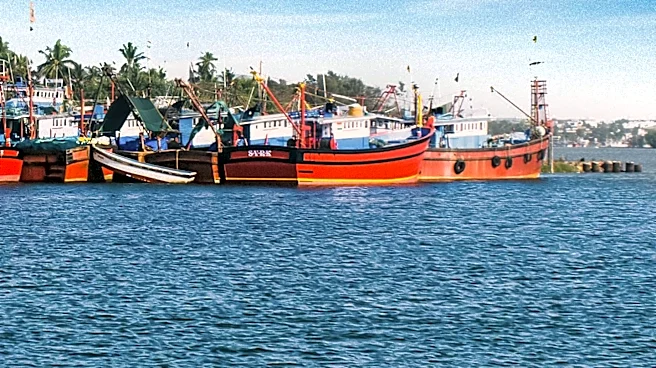
States and China. The Chancay port, located approximately 50 miles north of Lima, was inaugurated in November 2024 and began full commercial operations in June 2025. It has a designed capacity of one million TEU annually. The U.S. has expressed concerns over the port's potential 'dual usage' and its implications for regional security, suggesting it could pose a military threat to the Western Hemisphere. Despite these concerns, Chinese officials have dismissed such accusations. The court's decision allows Ositran to regulate, supervise, inspect, and sanction the port's operations under Peruvian law, overturning a lower court ruling that had sided with COSCO, which argued the port was privately funded and not subject to government oversight.
Why It's Important?
The court's decision is significant as it highlights the ongoing geopolitical struggle between the U.S. and China over influence in Latin America. The Chancay port is strategically important for trade between Asia and Latin America, and its oversight by Peruvian authorities could impact China's commercial interests in the region. The U.S. views the port's potential military use as a threat, reflecting broader concerns about China's expanding influence in the Western Hemisphere. This development could affect U.S.-Peru relations and influence future infrastructure projects involving Chinese companies in Latin America. The decision also underscores the importance of regulatory oversight in maintaining national sovereignty over critical infrastructure.
What's Next?
The decision by the Peruvian court is not final and can be appealed, which means further legal battles could ensue. China has yet to respond to this ruling, but it has previously criticized similar decisions, such as the invalidation of CK Hutchison's concession in Panama. The outcome of any appeals could influence China's future investments in the region and its diplomatic relations with Peru. Additionally, the U.S. may continue to exert pressure on Peru and other Latin American countries to limit Chinese influence, potentially affecting regional trade dynamics and geopolitical alliances.