
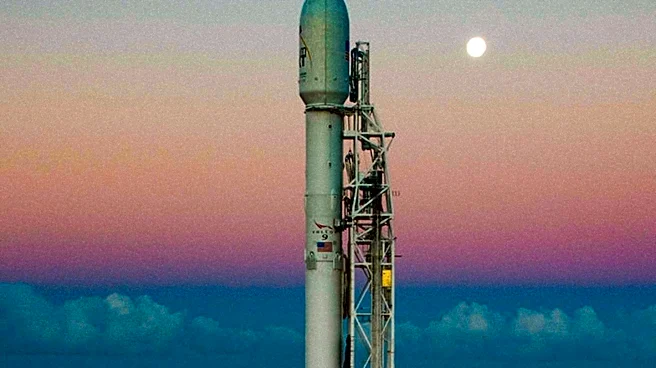
What's Happening?
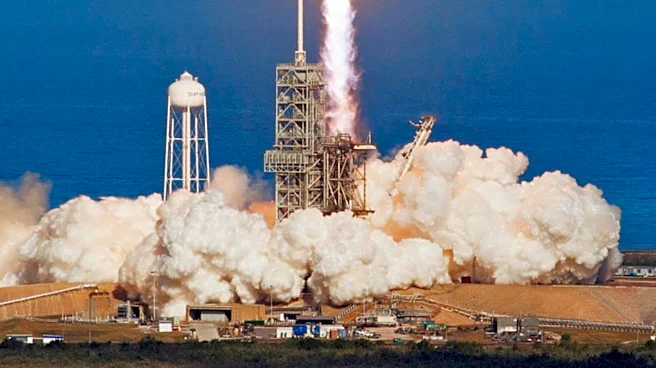
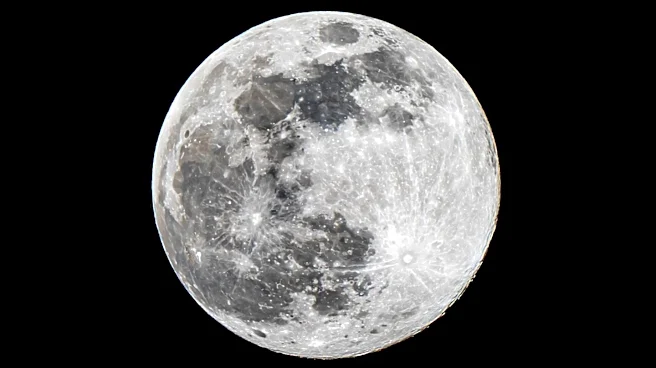
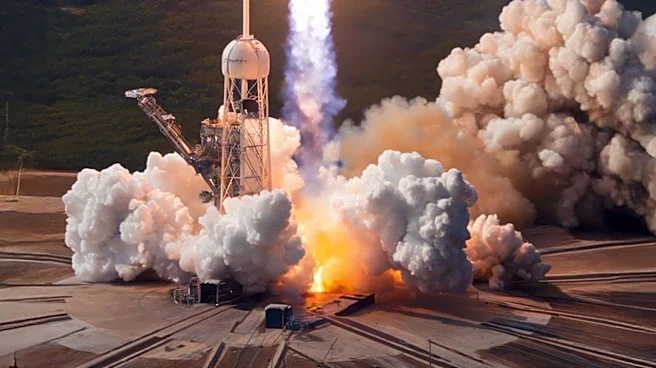
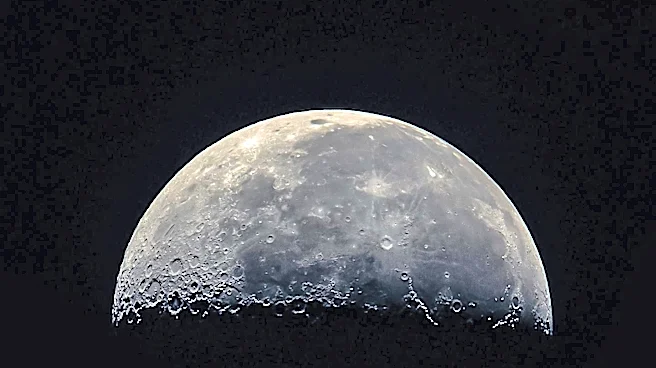
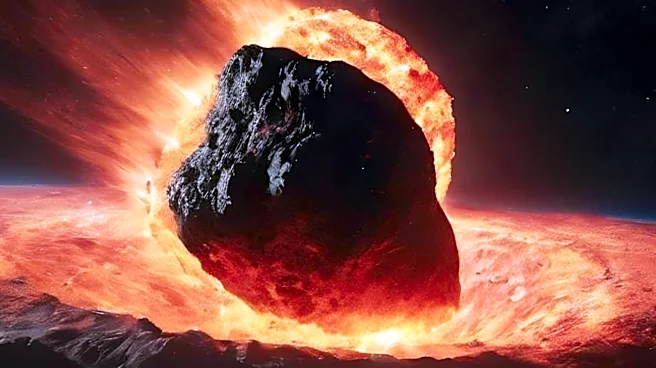
A segment of a SpaceX Falcon 9 rocket is believed to have crashed into the moon, creating a new lunar crater. The rocket piece, weighing 4 metric tonnes, was expected to hit the moon's surface at a speed of 5,400 mph. This event, while not posing a danger
to Earth, raises concerns about space debris. The collision highlights the challenges of managing human-made objects in space, as the rocket segment was part of the growing amount of space junk orbiting Earth. The impact is expected to be confirmed by experts using telescopes.
Why It's Important?
The incident underscores the increasing issue of space debris and its potential impact on future space missions. As space exploration and satellite launches continue to grow, managing debris becomes crucial to prevent collisions and ensure the safety of space operations. The event also raises questions about the environmental impact of space activities, including the potential effects on the lunar surface and the broader implications for space policy and regulation. Addressing these challenges is essential for sustainable space exploration and the protection of celestial bodies.