
What's Happening?
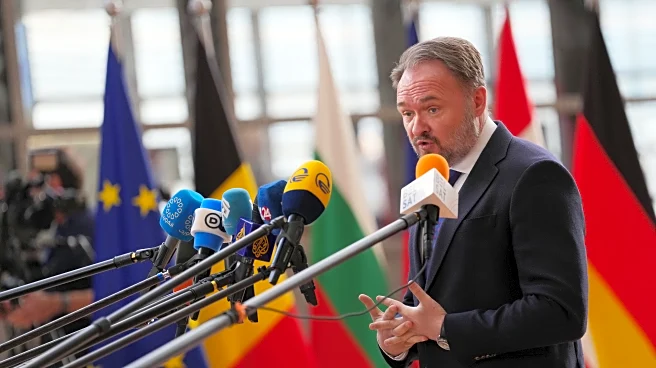
EU diplomats, excluding Hungary, have pledged support for a special tribunal to prosecute Russian war crimes, gathering in Kyiv to discuss the initiative. The meeting, attended by foreign ministers from several EU countries, focused on ensuring accountability
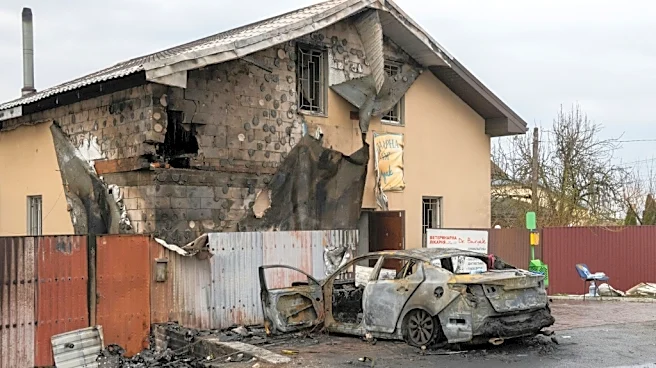
for Russia's actions during its invasion of Ukraine. The atrocities committed in Bucha, where over 400 civilians were killed, were highlighted as evidence of Russia's aggression. The EU is pushing forward with the creation of a tribunal and a claims commission to allow individuals to seek damages from Russia. However, Hungary's veto on financial support and sanctions against Russia remains a significant obstacle.
Why It's Important?
The EU's commitment to establishing a tribunal for Russian war crimes underscores the international community's demand for accountability in conflicts. This move could set a precedent for addressing war crimes and ensuring justice for victims. The tribunal's establishment could also influence geopolitical dynamics, as it involves legal and financial backing from multiple states. Hungary's opposition highlights the complexities within the EU regarding unified responses to international conflicts. The outcome of these efforts could impact EU-Russia relations and the broader international legal framework for prosecuting war crimes.
What's Next?
The EU aims to operationalize the tribunal with legal and financial backing from member states and beyond. An informal meeting of EU leaders is scheduled in Cyprus, with a summit in Brussels in June, where further discussions on the tribunal and sanctions are expected. The resolution of Hungary's opposition remains a critical factor in advancing these initiatives. The EU's ability to navigate internal disagreements and present a united front will be crucial in the tribunal's success and in maintaining pressure on Russia.