





What's Happening?
Mayor Karen Bass announced that the Los Angeles Harbor Commission has approved more than $70 million for significant waterfront improvements. This funding is designated for projects including expanded roads, new pedestrian walkways, and public restrooms,
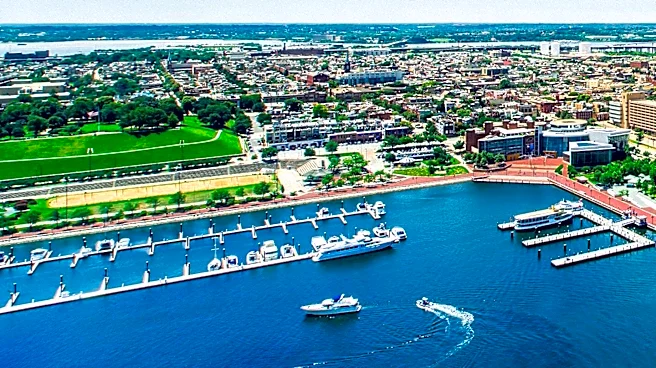
all in preparation for the 2028 Summer Olympics. Specifically, $66.5 million will be allocated to reconfigure and expand Harbor Boulevard infrastructure and create pedestrian pathways along the LA Waterfront in San Pedro, an area slated to host sailing competitions during the Games. An additional $3.7 million will fund the construction of new public restrooms at Wilmington Waterfront Park. A section of Harbor Boulevard will be widened to two travel lanes in each direction, and the project also includes a landscaped scenic pedestrian walkway and new pathways connecting Harbor Boulevard and Miner Street with direct access to a nearby trolley stop. Mayor Bass emphasized that these improvements aim to enhance community safety and quality of life by investing in public spaces, while also leveraging the global attention of the Olympics to deliver lasting benefits for Angelenos.
Why It's Important?
These waterfront improvements are crucial for Los Angeles as it prepares to host the 2028 Summer Olympics, showcasing the city on an international stage. The investment in infrastructure, particularly along the LA Waterfront, will directly impact the experience of athletes, visitors, and residents. Enhanced pedestrian access and expanded roadways are expected to improve traffic flow and accessibility, which are vital for managing the influx of people during the Games. Beyond the Olympics, these projects are intended to provide long-term benefits for the local community, improving public spaces and potentially boosting local businesses through increased foot traffic and tourism. The Port of Los Angeles, already North America’s leading trade gateway, stands to benefit from improved infrastructure, further solidifying its role as a critical economic hub. The investment reflects a strategic effort to use a major global event as a catalyst for urban development and community enhancement, aiming to leave a positive legacy for the city.
What's Next?
The approved funding will now move forward with the implementation phase of these waterfront improvement projects. Construction and development are expected to commence, focusing on reconfiguring Harbor Boulevard, creating new pedestrian pathways, and building public restrooms. These projects will be closely monitored to ensure completion before the 2028 Summer Olympics. The city will likely engage with local communities and stakeholders throughout the development process to minimize disruption and maximize the benefits. As the projects progress, there will be ongoing assessments of their impact on local traffic, public access, and environmental considerations. The successful completion of these initiatives will be a key indicator of Los Angeles's readiness to host a major international event and its commitment to long-term urban development.
Beyond the Headlines
The investment in the LA Waterfront extends beyond mere Olympic preparations; it represents a broader strategy for urban revitalization and sustainable development. By improving public spaces and infrastructure, Los Angeles is aiming to enhance the quality of life for its residents and create a more attractive environment for both tourism and local commerce. The emphasis on pedestrian walkways and public amenities suggests a move towards more walkable and accessible urban areas, which can foster community engagement and promote healthier lifestyles. This initiative also highlights the complex interplay between major international events and local urban planning, demonstrating how global spectacles can drive significant local investment and development. The long-term success of these projects will depend on their ability to integrate seamlessly into the existing urban fabric and provide enduring value to the diverse communities along the LA Waterfront, well beyond the conclusion of the 2028 Olympics.