







What's Happening?
The Green Bay Landmarks Commission has issued a 'demolition by neglect' designation for the property located at 402 Dousman Street. This marks only the second time such a designation has been made in the city. The building, situated in a historic district,
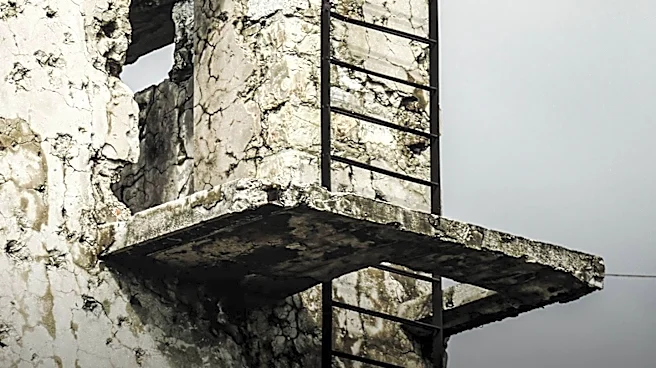
has been vacant for at least 15 years, with plastic covering its window openings for the past two years. The designation allows the city to undertake necessary repairs for the building's safety at the owner's expense. The commission initially discussed the issue in June, granting the owner two months to address a list of concerns. However, city officials reported a lack of significant progress, leading to the current designation and the imposition of reinspection fees three times a week. The approximately 120-year-old building is currently listed for sale at $350,000, a reduction from its June price of $425,000. The city had previously approved window replacements and provided a $52,500 facade grant, both of which have since expired. Despite eight documented complaints over 15 years, only one citation was issued regarding the property.
Why It's Important?
This action by the Green Bay Landmarks Commission highlights the ongoing challenges faced by municipalities in preserving historic structures, particularly when private owners neglect their upkeep. The 'demolition by neglect' designation serves as a critical tool for cities to intervene and prevent the deterioration of historically significant buildings, which can otherwise become safety hazards and blight on communities. The case of 402 Dousman Street underscores the tension between property rights and public interest in historic preservation. The city's ability to make repairs at the owner's expense could set a precedent for future cases, potentially encouraging other owners of neglected historic properties to take proactive measures. The expiration of a facade grant and the minimal enforcement through citations also raise questions about the effectiveness of existing incentives and penalties in preventing such prolonged neglect. This situation impacts the aesthetic and historical integrity of Green Bay's downtown, potentially affecting tourism and local business investment in the historic district.
What's Next?
Following the 'demolition by neglect' designation, the city plans to prepare a letter for the property owner, Michael Schwantes, detailing a forthcoming repair order. The city intends to collaborate with the owner on a plan to 'save the structure.' Schwantes, the registered agent for the LLC owning the property, claims a contractor has been hired to install windows and asserts the building is not unstable, citing engineers and architects. He also mentioned that three contractors, including a pizza restaurant moving into the adjacent former Chefusion building, have expressed serious interest in purchasing the property. The city's intervention could accelerate the sale or renovation of the building, potentially revitalizing the neglected corner. The outcome of this case will likely influence how Green Bay handles similar situations with other historic properties in the future, potentially leading to more stringent enforcement or revised incentive programs to encourage preservation.
Beyond the Headlines
The 'demolition by neglect' designation for 402 Dousman Street touches upon broader themes of urban decay, historic preservation, and the responsibilities of property ownership within a community. The prolonged vacancy and deterioration of the building, despite its location in a historic district, reflect a systemic issue where the economic burden of maintaining old structures can outweigh the perceived benefits for owners. The city's struggle with minimal citations despite numerous complaints suggests potential gaps in enforcement mechanisms or a reluctance to impose harsher penalties until a critical point is reached. This case could spark a wider discussion on the balance between private property rights and the collective desire for urban beautification and historical continuity. It also highlights the often-complex process of revitalizing downtown areas, where individual property decisions can have ripple effects on the entire district's character and economic viability. The eventual fate of 402 Dousman Street will be a test case for Green Bay's commitment to preserving its architectural heritage.