





What's Happening?
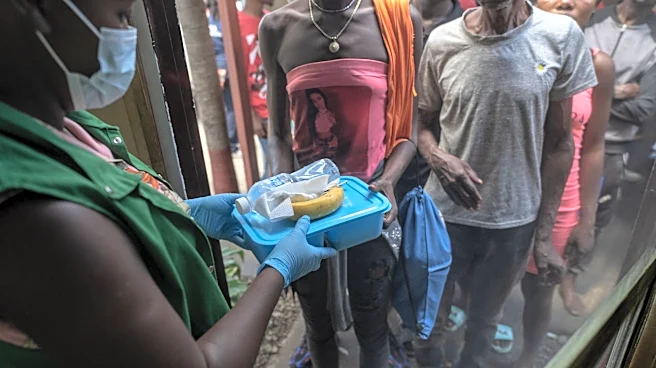
Six months into the Ebola outbreak caused by the Bundibugyo virus in the Democratic Republic of Congo (DRC), UNICEF, alongside other humanitarian partners, emphasizes the critical need to access hard-to-reach communities to halt the spread. Despite significant
progress in delivering life-saving services, the outbreak continues to expand due to ongoing conflict, displacement, and humanitarian needs. Over 11,000 cases and 5,400 deaths have been reported since the outbreak began, with children accounting for more than a quarter of confirmed cases and one-third of deaths. Alarmingly, seven out of ten children under five with confirmed Ebola have died. While transmission has slowed in initial epicenters, 400 to 500 new cases are still reported weekly, and the outbreak has spread to 67 health zones across eight provinces. Contact follow-up remains below target, and two-thirds of confirmed deaths occur in communities, indicating late identification of infections. Recent imported cases in Kenya and Nigeria underscore the risk of cross-border spread, while delays in paying frontline health workers create tension and slow the response.
Why It's Important?
This Ebola outbreak represents a severe public health crisis, particularly for children in the DRC, who are disproportionately affected by the disease's mortality. The high death rate among young children highlights their extreme vulnerability and the urgent need for targeted interventions. The ongoing conflict and displacement not only exacerbate the spread of the virus but also hinder humanitarian efforts, making it difficult to reach affected populations and provide timely care. The risk of international spread, as evidenced by cases in neighboring countries, underscores the global implications of localized outbreaks and the necessity of robust international cooperation. Furthermore, the challenges in compensating frontline health workers can undermine morale and operational effectiveness, jeopardizing the entire response. This situation stresses the critical link between security, humanitarian access, and public health outcomes in fragile states.
What's Next?
The United Nations, Africa Centres for Disease Control and Prevention, regional economic bodies, and humanitarian partners are fully mobilized, with WHO leading the technical health response. Nearly 100 health and humanitarian partners are providing essential services, including treatment for acute malnutrition. Diagnostic capacity has expanded, and treatment beds are available in numerous centers. Surveillance, contact tracing, risk communication, community engagement, and safe burial practices have also been scaled up. Cross-border collaboration has strengthened information sharing and coordination. However, these achievements remain fragile. A halt in hostilities is urgently needed to protect communities and health workers. Sustained, flexible funding through 2027, political commitment, safe access, protection of healthcare, and meaningful community participation are crucial. Addressing wider humanitarian needs, such as food security, water, sanitation, child protection, and maternal health, is also essential to bring the outbreak to an end.
Beyond the Headlines
The Ebola outbreak in the DRC exposes the profound impact of protracted conflict and instability on public health infrastructure and humanitarian response capabilities. The disproportionate mortality among children points to systemic vulnerabilities within the healthcare system and broader societal challenges. The issue of delayed payments to frontline health workers highlights the ethical and practical dilemmas faced by humanitarian operations in complex environments, where the dedication of local personnel is often taken for granted. This crisis also underscores the interconnectedness of global health security, as localized outbreaks can quickly become regional or international threats. The long-term implications include not only the direct health consequences but also the erosion of trust in public institutions and the exacerbation of existing social and economic inequalities, making recovery and development even more challenging.