





What's Happening?
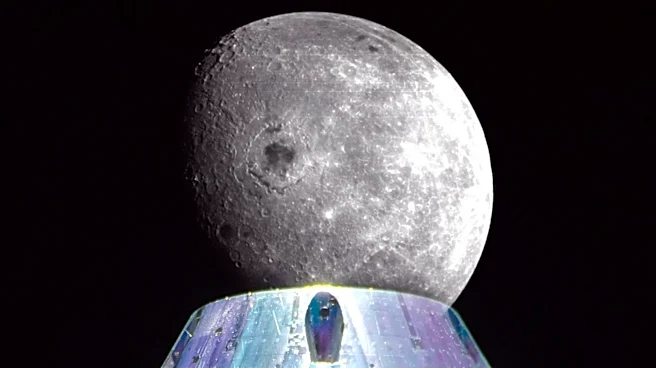
Astronomers have precisely determined the rate at which the Moon is shrinking, a phenomenon that leads to moonquakes across its surface. A study led by Smithsonian National Air and Space Museum planetary geologist Thomas Watters, published in The Planetary
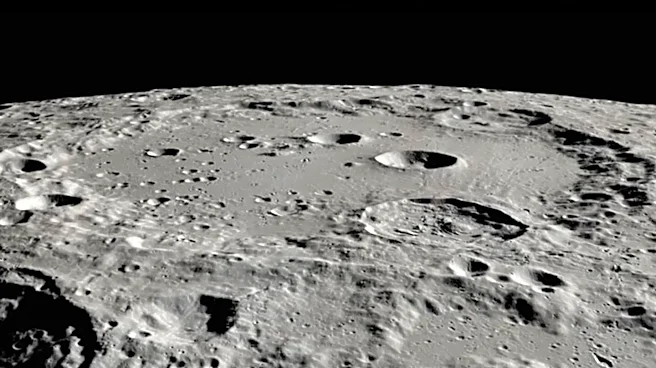
Science Journal, utilized over 17 years of data from NASA’s Lunar Reconnaissance Orbiter Camera (LROC). The findings indicate that the Moon's overall radius has decreased by nearly 148 feet over the last 400–800 million years, translating to a contraction rate of approximately 2.4 to 4.3 inches per million years, or 0.1 micrometer annually. This slow but continuous cooling and contraction of the Moon's interior generate slips and faults anywhere on its single, shell-like plate, unlike Earth's tectonic plates.
Why It's Important?
The continuous shrinkage of the Moon and the resulting moonquakes have significant implications for future lunar missions and the establishment of a long-term human presence. Unlike Earth, where seismic activity is concentrated at plate boundaries, the Moon's single-plate structure means moonquakes can occur unpredictably across its entire surface. The study identified over 10,000 visible lunar faults, highlighting the widespread nature of this geological activity. Understanding the distribution and frequency of these moonquakes is crucial for NASA and other space agencies to design resilient lunar habitats and infrastructure, ensuring the safety of astronauts and equipment. This research also deepens our understanding of the Moon's geological evolution and internal processes.
What's Next?
Further research will likely focus on mapping and characterizing lunar faults with greater precision to identify areas of higher seismic risk. This information will be vital for selecting safe landing sites and construction zones for future lunar bases. NASA will use these findings to better plan for sustained human exploration, potentially developing moonquake-resistant structures and early warning systems. The ongoing monitoring of the Moon's surface by instruments like LROC will continue to provide data to refine these models and predictions. The study also suggests that the growth of existing faults and the formation of new ones are expected to continue as the Moon's interior cools and contracts.
Beyond the Headlines
The Moon's ongoing geological activity, driven by its internal cooling, offers a unique natural laboratory for planetary science. The fact that moonquakes can occur anywhere on its surface, due to its monolithic crust, presents a stark contrast to Earth's dynamic plate tectonics. This difference provides valuable insights into the fundamental processes of planetary evolution and the various ways celestial bodies cool and contract. Ethically, as humanity contemplates a more permanent presence on the Moon, understanding these natural hazards becomes paramount, underscoring the responsibility to ensure the safety and sustainability of lunar exploration. The research also highlights the long-term, subtle yet powerful forces that shape planetary bodies over geological timescales.