





What's Happening?
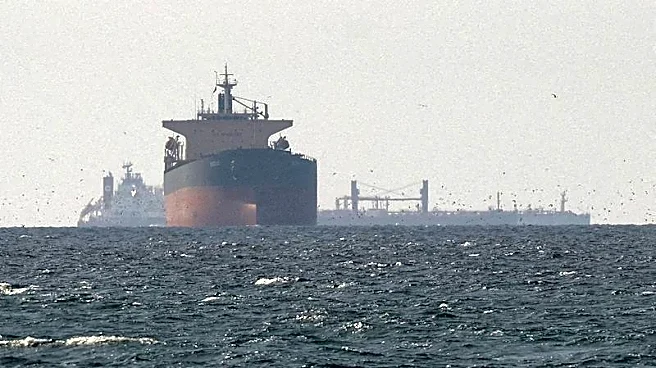
President Trump recently suggested a joint venture with Iran to manage the Strait of Hormuz, a critical maritime chokepoint, as a business opportunity. He indicated that significant profits could be made from the 'traffic buildup' in the area. Historically,
the U.S. has maintained a policy of ensuring freedom of navigation as a public good, not a commercial venture. This approach has been a cornerstone of U.S. foreign policy, supporting global trade and stability. Trump's remarks suggest a shift towards viewing international relations as transactional, focusing on immediate financial gains rather than long-term strategic interests.
Why It's Important?
The proposal to monetize the Strait of Hormuz represents a significant departure from traditional U.S. foreign policy, which has prioritized maintaining open sea lanes for global commerce. This shift could undermine the U.S.'s role as a global leader in promoting free trade and stability. By treating strategic chokepoints as revenue sources, the U.S. risks damaging its credibility and weakening alliances. The long-term impact could be a diminished ability to influence global trade and security, as other nations may question the reliability of U.S. commitments to international norms and agreements.
What's Next?
If pursued, this policy could lead to increased tensions with allies who rely on the U.S. to maintain open sea lanes. It may also provoke reactions from countries that view the Strait of Hormuz as a critical passage for their energy supplies. The U.S. could face diplomatic challenges as it navigates the implications of this transactional approach. Additionally, there may be domestic debates over the potential economic and security consequences of such a policy shift.