






What's Happening?
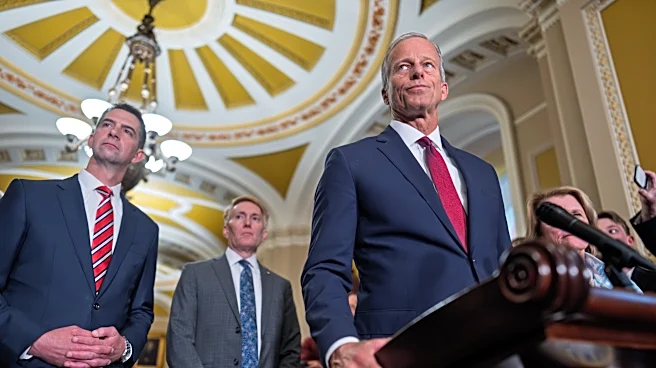
Senate Republicans are moving forward with a reconciliation package aimed at funding immigration enforcement agencies through fiscal year 2029. This legislative effort follows a delay in May due to concerns over the Trump administration's proposed use
of taxpayer dollars for compensating individuals alleging federal targeting. Acting Attorney General Todd Blanche informed Congress that plans for an anti-weaponization fund have been scrapped, which has alleviated some bipartisan concerns. However, President Trump has not definitively confirmed the fund's status, leaving its future uncertain. The Senate has voted to proceed with a $72 billion package for immigration enforcement, notably excluding nearly $1 billion initially intended for Secret Service security enhancements at President Trump's planned ballroom. The reconciliation process allows the majority party to pass budget-related legislation with a simple majority, bypassing the typical 60-vote threshold required to avoid a filibuster.
Why It's Important?
The advancement of this reconciliation package is significant as it highlights the ongoing political maneuvering in Congress regarding immigration enforcement funding. The use of reconciliation underscores the strategic efforts by Republicans to secure funding for immigration priorities without needing bipartisan support. This move could have substantial implications for immigration policy and enforcement in the U.S., potentially affecting millions of individuals and the operations of federal agencies. The exclusion of funding for Secret Service enhancements reflects the contentious nature of budget allocations and the political calculations involved in securing legislative support. The reconciliation process itself is a critical tool in the legislative arsenal, allowing the majority party to enact significant policy changes with a simple majority, thus shaping the political landscape.
What's Next?
As the reconciliation package progresses, Democrats are expected to challenge Republicans with a series of amendments during the vote-a-rama phase, which could lead to further political confrontations. The outcome of these votes will determine the final shape of the funding package and could influence future legislative strategies. The reconciliation process will continue to be a focal point for both parties as they navigate the complexities of budgetary legislation. The potential for further amendments and political negotiations suggests that the final outcome remains uncertain, with significant implications for immigration policy and federal funding priorities.