
What's Happening?
A Viking-age burial discovered in Trøndelag, Norway, has presented archaeologists with a unique historical mystery. The grave, which dates back to the 9th century, contained the remains of a woman buried
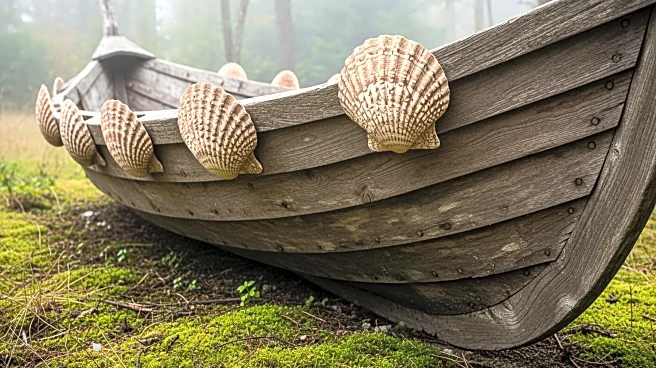
with scallop shells placed near her mouth. This practice is unprecedented in pre-Christian Viking burials, and there are no known parallels in the archaeological record. The discovery was made by metal detectorist Roy Søreng, who found a bronze brooch typical of the Viking era in a field in Bjugn, Trøndelag County. The Norwegian University of Science and Technology (NTNU) and Trøndelag County Council were alerted, leading to the excavation of the site. The burial included typical Viking Age costume and jewelry, suggesting the woman was a free and possibly married individual, potentially the mistress of a farm. The scallop shells, however, remain a mystery, as they have no known symbolic meaning in 9th-century Scandinavia.
Why It's Important?
The discovery of the scallop shells in the Viking-age burial is significant as it challenges existing understandings of Viking burial practices and cultural symbolism. The presence of these shells, which have no known precedent in the region or period, suggests a potential cultural exchange or influence that has not been previously documented. This finding could lead to new insights into the social and cultural dynamics of the Viking Age, particularly regarding trade, migration, and the exchange of ideas. The burial also highlights the importance of interdisciplinary research in archaeology, as further analysis, including DNA testing and dating, could provide more information about the woman's identity and her possible connections to other historical sites.
What's Next?
Researchers plan to conduct further examinations of the skeleton and artifacts found in the burial. This includes preserving the objects and taking samples for dating and DNA analysis. The goal is to learn more about the woman's identity and any potential kinship ties to another burial discovered in the same field, dating back to the 700s. These efforts may uncover new information about the social structure and cultural practices of the Viking Age, potentially reshaping historical narratives about this period.