



What's Happening?
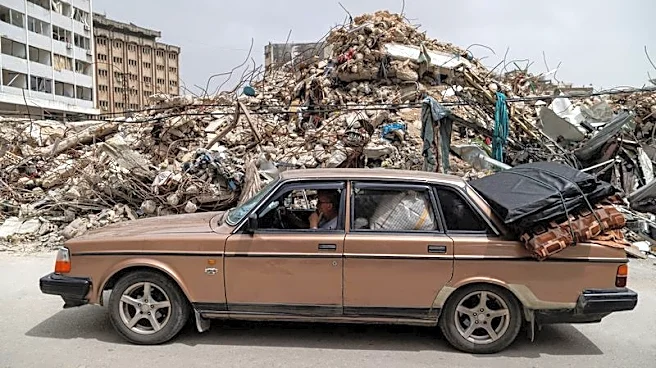
On April 22, 2026, Israeli military actions in southern Lebanon led to the death of Lebanese journalist Amal Khalil and the injury of another journalist, Zeinab Faraj. The incident occurred during ongoing Israeli strikes in the region, which have been
part of heightened tensions between Israel and Hezbollah. According to a senior Lebanese army official, an Israeli drone dropped a grenade on rescue forces attempting to reach the journalists trapped under rubble. Despite Beirut's request through U.S. mediation for Israel to allow emergency teams access, further attempts to rescue Khalil were thwarted by additional Israeli fire, resulting in her death. The Israeli military acknowledged reports of journalists being injured but denied targeting them or obstructing rescue efforts.
Why It's Important?
This incident underscores the escalating conflict between Israel and Hezbollah, highlighting the risks faced by journalists in conflict zones. The death of Amal Khalil has drawn international attention to the dangers of reporting in volatile regions and the need for the protection of journalists. Lebanon's condemnation of the attacks and the call for accountability may increase diplomatic tensions and pressure on Israel from the international community. The situation also reflects the broader geopolitical dynamics in the Middle East, where military actions can have significant humanitarian and political repercussions.
What's Next?
The incident is likely to prompt further diplomatic discussions and potential interventions by international bodies advocating for the safety of journalists. Lebanon may seek to escalate the issue in international forums, calling for investigations into the conduct of military operations in civilian areas. The ongoing conflict between Israel and Hezbollah is expected to continue, with potential for further military engagements and international diplomatic efforts to de-escalate tensions.