



What's Happening?
Pakistan's agricultural sector is under significant pressure due to a recent hike in petroleum prices, which has seen petrol and diesel costs rise to record levels. The government increased the price of petrol to Rs321.17 per litre and diesel to Rs335.86
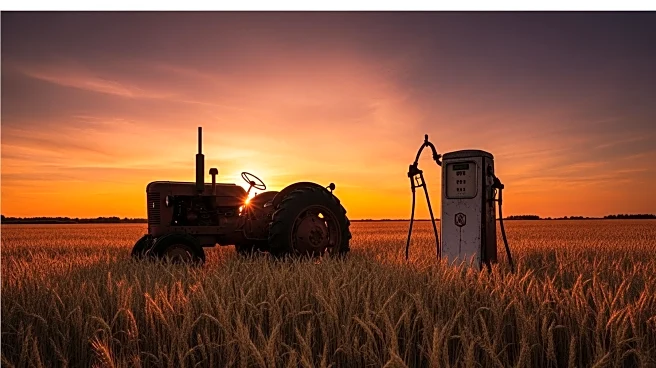
per litre, citing international oil price fluctuations and fiscal pressures. This increase is particularly impactful on the agricultural sector, which relies heavily on diesel for machinery and transportation. The term 'fuelflation' is being used to describe the inflationary pressures caused by these rising fuel costs, which are affecting farm profits, food affordability, and rural livelihoods. The situation is exacerbated by Pakistan's reliance on diesel-powered equipment for plowing, irrigation, and crop transportation, making the sector vulnerable to global energy market changes.
Why It's Important?
The rising fuel prices pose a significant threat to Pakistan's agricultural sector, which is a cornerstone of the country's economy, providing employment and ensuring food security. Smallholder farmers, who make up a large portion of the sector, are particularly vulnerable as they often lack access to affordable credit and modern machinery. The increased costs could lead to reduced crop yields and higher food prices, impacting both rural incomes and consumer affordability. The situation highlights the need for Pakistan to reduce its reliance on fossil fuels and explore alternative energy sources, such as solar-powered irrigation, to mitigate the impact of global energy market volatility.
What's Next?
To address the challenges posed by rising fuel prices, Pakistan may need to implement policies that support the agricultural sector in transitioning to more sustainable energy sources. This could include government subsidies for solar-powered irrigation systems and promoting energy-efficient machinery. Additionally, enhancing rural infrastructure and supply chains could help reduce transportation costs. Policymakers might also consider providing financial aid to smallholder farmers to shield them from the immediate impacts of fuel price hikes.
Beyond the Headlines
The issue of 'fuelflation' in Pakistan's agricultural sector underscores a broader structural vulnerability in the country's economy. As a net importer of fuel, Pakistan is highly susceptible to global price fluctuations, which can have cascading effects on food security and economic stability. The situation calls for a strategic approach to integrate energy and agricultural policies, focusing on long-term sustainability and resilience against external shocks.