







What's Happening?
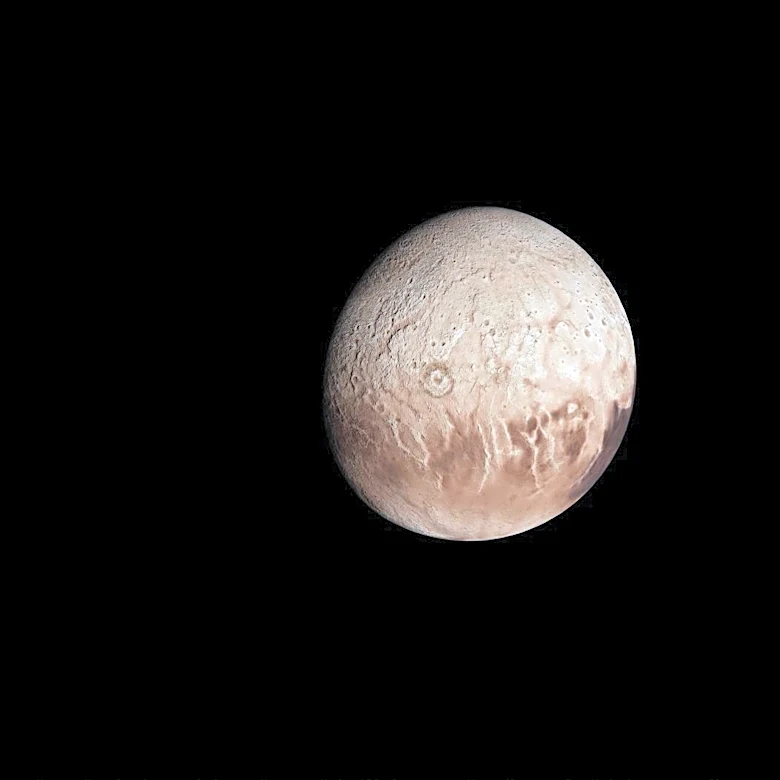
For the first time, astronomers have measured both the mass and distance of a rogue planet, an object drifting through the galaxy without a star to orbit. The planet, located about 9,800 light-years away, has a mass comparable to Saturn. This breakthrough
was achieved by observing a microlensing event from two different vantage points: Earth-based telescopes and the Gaia space telescope. The event, catalogued as KMT-2024-BLG-0792, provided the necessary data to determine the planet's characteristics, marking a significant advancement in the study of rogue planets.
Why It's Important?
This measurement represents a major step forward in understanding rogue planets, which are believed to be abundant in the Milky Way. By determining the mass and distance of such an object, astronomers can better understand its origins and the processes that lead to its current state. The findings support the hypothesis that the galaxy may contain billions of these starless worlds, offering new insights into planetary formation and dynamics. This research also highlights the potential of simultaneous Earth and space-based observations in overcoming challenges in astronomical measurements.
What's Next?
The success of this method paves the way for future studies of rogue planets, with upcoming missions like NASA's Nancy Grace Roman Space Telescope expected to discover many more such objects. These efforts will help refine population statistics and improve our understanding of the different pathways that lead to the formation of rogue planets. As more data becomes available, astronomers will be able to distinguish between planets that were ejected from their systems and those that formed in isolation, providing a clearer picture of the galaxy's planetary population.