


What's Happening?
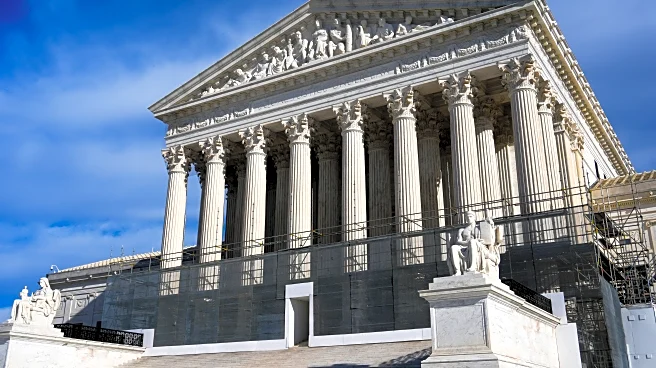
The U.S. Supreme Court recently ruled against President Trump's authority to impose sweeping global tariffs under the International Emergency Economic Powers Act (IEEPA). This decision was met with cautious optimism by U.S. trading partners, including
Canada and the European Union, who viewed the tariffs as unjustified. Despite the ruling, President Trump announced a new 10 percent tariff on all imports under a different authority. The ruling does not affect sector-specific duties on imports like steel and aluminum, which remain in place. Canada, largely spared from IEEPA levies due to existing trade agreements, expressed relief but noted that sector-specific measures continue to impact its industries. The European Union and the United Kingdom are analyzing the ruling's implications, while Mexico is assessing the potential effects of the newly announced tariffs.
Why It's Important?
The Supreme Court's decision underscores the ongoing tension between executive authority and international trade laws. For U.S. trading partners, the ruling offers a temporary reprieve from broad tariffs that have strained economic relations. However, the introduction of new tariffs by President Trump suggests a continued aggressive trade policy, potentially leading to further economic disruptions. Countries like Canada and Mexico, heavily reliant on U.S. trade, must navigate these changes carefully to protect their economic interests. The ruling also highlights the importance of legal checks on executive power, reinforcing the role of the judiciary in maintaining balance in U.S. trade policy.
What's Next?
Following the Supreme Court's decision, international stakeholders are closely monitoring the U.S. administration's next steps. Countries affected by the tariffs are likely to engage in diplomatic discussions to mitigate potential economic impacts. The ruling may prompt a reevaluation of trade strategies, with some nations considering alternative markets to reduce dependency on U.S. trade. Additionally, the decision could influence future legal challenges to executive trade actions, setting a precedent for how such powers are exercised.