
What's Happening?
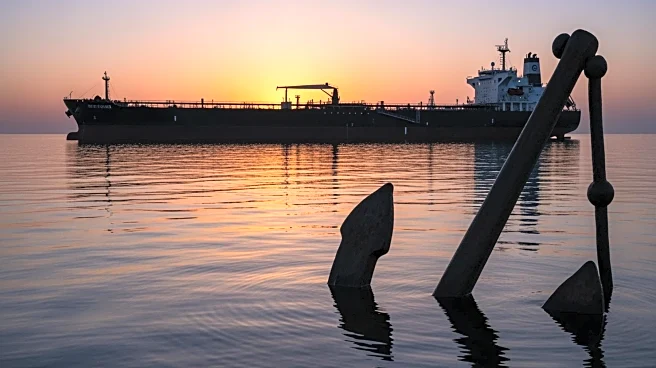
The U.S. has seized an oil tanker off the coast of Venezuela, an action described by the Venezuelan government as 'international piracy.' The tanker, reportedly bound for Cuba, was seized as part of the Trump
administration's efforts to curb the influence of President Nicolás Maduro's regime, which the U.S. accuses of supporting terrorist activities. President Trump announced the seizure, labeling it the 'largest ever' by the U.S. The operation involved multiple U.S. agencies, including the FBI and the U.S. Coast Guard, and was supported by the Department of Defense. The tanker has been under U.S. sanctions for years due to its alleged involvement in illicit oil shipping activities.
Why It's Important?
This development is significant as it underscores the escalating tensions between the U.S. and Venezuela, particularly in the context of U.S. anti-narcotics operations in Latin America. The seizure is part of a broader U.S. strategy to exert pressure on the Maduro regime, which is seen as a threat due to its alleged ties to terrorism and illicit activities. The U.S. military presence in the Caribbean has increased, with operations targeting drug-trafficking networks. This move could further strain U.S. relations with other Latin American countries, as evidenced by President Trump's recent criticisms of Colombia's President Gustavo Petro.
What's Next?
The U.S. is likely to continue its strategy of monitoring Venezuelan oil shipments and conducting operations against sanctioned networks. This could lead to increased diplomatic and economic pressure on the Maduro regime. The situation may also provoke further international criticism and protests, as seen in the reactions from Venezuela and Cuba, which have condemned the U.S. actions as violations of international law.
Beyond the Headlines
The seizure of the oil tanker highlights the complex geopolitical dynamics in the region, where U.S. actions are often viewed as imperialistic by local governments. The incident may also impact global oil markets, particularly given Venezuela's significant crude oil reserves. The U.S.'s aggressive stance could lead to shifts in alliances and trade relationships in Latin America, as countries navigate the pressures of U.S. foreign policy.