



What's Happening?
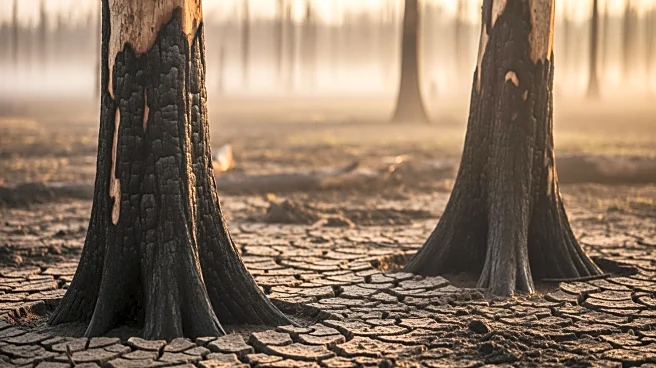
A new exhibition titled 'Water Pantanal Fire' is set to open at London's Science Museum, showcasing the dramatic effects of wildfires on the Pantanal, the world's largest tropical wetland. The exhibition features contrasting photographs by Lalo de Almeida
and Luciano Candisani, capturing the transformation of this biodiverse region into a fire-ravaged landscape. The Pantanal, which spans Brazil, Bolivia, and Paraguay, has been severely affected by climate change, deforestation, and intensive farming, leading to unprecedented wildfires. In 2020, a record-breaking fire season destroyed over a quarter of the region's vegetation. The exhibition aims to raise awareness about the environmental challenges facing the Pantanal and the urgent need for conservation efforts.
Why It's Important?
The exhibition underscores the critical impact of climate change and human activities on fragile ecosystems like the Pantanal. As one of the most biodiverse regions on the planet, the Pantanal's degradation poses a significant threat to its unique wildlife, including jaguars, howler monkeys, and numerous aquatic species. The fires not only disrupt the natural wet and dry cycles but also contribute to global biodiversity loss. By highlighting these issues, the exhibition seeks to engage the public and policymakers in discussions about sustainable practices and the importance of protecting natural habitats. The situation in the Pantanal serves as a stark reminder of the broader environmental challenges facing the world, emphasizing the need for immediate action to mitigate climate change and preserve ecological balance.
What's Next?
The exhibition is expected to spark conversations about conservation strategies and the role of international cooperation in addressing environmental crises. It may lead to increased support for initiatives aimed at restoring the Pantanal and preventing future wildfires. Stakeholders, including governments, environmental organizations, and local communities, are likely to explore collaborative efforts to implement sustainable land management practices. Additionally, the exhibition could inspire similar awareness campaigns globally, focusing on other vulnerable ecosystems. The ongoing dialogue may influence policy changes and funding allocations for conservation projects, highlighting the interconnectedness of global environmental issues.
Beyond the Headlines
The exhibition also raises ethical questions about humanity's responsibility towards preserving natural environments. It challenges viewers to consider the long-term consequences of industrial activities and climate change on ecosystems and the species that inhabit them. The visual impact of the photographs serves as a powerful tool for environmental education, potentially influencing cultural attitudes towards conservation. By documenting the Pantanal's plight, the exhibition contributes to a growing body of evidence advocating for urgent environmental action. It highlights the need for a paradigm shift in how societies value and interact with nature, promoting a more sustainable and harmonious coexistence.