







What's Happening?
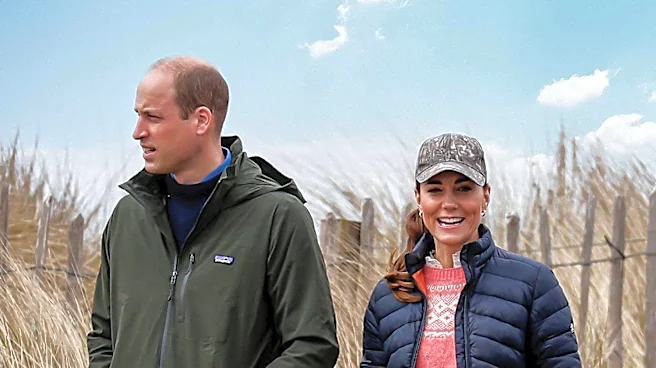
During the early years of their relationship, Prince William and Kate Middleton reportedly used aliases to maintain privacy during their romantic getaways. According to royal author Robert Jobson's 2024 biography, 'Catherine, the Princess of Wales,' the couple
occasionally checked into hotels using the names 'Mr. and Mrs. Smith.' This practice was an attempt to avoid public scrutiny while William was one of the most recognizable young royals. Jobson notes that while they often stayed at royal estates like Highgrove or Sandringham, they also sought private hotel stays. This wasn't William's only attempt at anonymity; during his time at St Andrews University in 2001, he reportedly used the pseudonym 'Steve' to try and blend into ordinary student life, with Kate reportedly playing along. Another instance of aliases occurred in 2007, following a brief breakup, when they traveled to the Seychelles and used the names 'Martin and Rose Middleton' to rekindle their relationship, as detailed in Andrew Morton's 2011 biography 'William and Catherine.'
Why It's Important?
The use of aliases by Prince William and Kate Middleton highlights the significant challenges faced by public figures, particularly royals, in maintaining personal privacy. This practice underscores the constant media attention and public interest surrounding their lives, even before their marriage. It reveals their early efforts to carve out a normal relationship amidst extraordinary circumstances, demonstrating a desire for personal space and intimacy away from the glare of the spotlight. This behavior also sheds light on the broader implications of celebrity culture and the erosion of privacy for those in the public eye. The need for such measures, even for seemingly innocuous activities like romantic getaways, illustrates the intense pressure and lack of personal freedom experienced by members of the royal family. It also provides a glimpse into the strategies employed to manage public perception and protect their personal lives, which can influence how other public figures approach their own privacy concerns.
What's Next?
While the use of aliases by Prince William and Kate Middleton is a historical detail from their early relationship, it continues to inform public understanding of their efforts to manage privacy. In the future, as their children grow, similar strategies might be employed to protect their privacy, especially given the heightened media scrutiny on younger royals. The ongoing public interest in their personal lives means that any attempts to maintain privacy will likely continue to be a subject of discussion and analysis by royal commentators and biographers. The broader conversation about the balance between public duty and personal life for members of the royal family will persist, influencing how future generations of royals are presented to the public and how their private moments are safeguarded. This historical context also sets a precedent for how the institution of the monarchy adapts to modern media landscapes and the demands for transparency versus the need for personal space.
Beyond the Headlines
The revelation of Prince William and Kate Middleton's use of aliases delves into the deeper psychological and societal aspects of living under constant public surveillance. It highlights the inherent tension between the public's fascination with royalty and the fundamental human need for privacy and normalcy. The choice of 'Mr. and Mrs. Smith' or 'Steve' reflects a desire to momentarily escape their royal identities and experience life as ordinary individuals, a sentiment many public figures can relate to. This practice also subtly critiques the intrusive nature of modern media and the relentless pursuit of personal details, even for those who have not explicitly sought celebrity. Ethically, it raises questions about the boundaries of public interest versus individual rights to privacy, especially for individuals whose lives are inherently public from birth. Culturally, it reinforces the enduring mystique of royalty while simultaneously humanizing them, showing their attempts to navigate a world that often denies them simple anonymity.