






What's Happening?
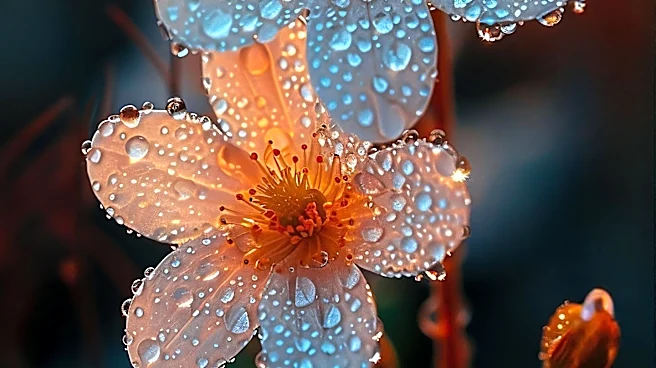
Researchers at Florida Atlantic University (FAU) have published a study in the journal *New Phytologist* detailing how semi-translucent sections, or 'windows,' in flower petals affect the internal light, temperature, and microbial communities within flowers.
The study, led by Jessica Williams, an integrative biology doctoral student, and Jacob Francis, Ph.D., an assistant professor, focused on two blueberry relatives native to the southeastern U.S., *Lyonia lucida* and *Lyonia fruticosa*. They found that these petal windows transmit more ultraviolet (UV) and infrared (IR) radiation than pigmented tissue. This transmission directly influences the microclimates inside the flowers, with higher IR transmission leading to warmer internal temperatures in *Lyonia lucida* and a reduction in mold across both species. The research indicates a complex interaction where light and temperature are key factors in shaping the floral microbiome, challenging the traditional focus solely on floral color's role in pollinator attraction.
Why It's Important?
This research offers a novel perspective on flowers as dynamic microhabitats, highlighting that seemingly minor petal traits can have significant ecological consequences. Understanding how floral microclimates influence microbial communities is crucial because these microbes can affect nectar characteristics and, consequently, the interactions between flowers and their pollinators. This could impact broader ecosystem functions like pollination, which is vital for agriculture and biodiversity. The findings suggest that plant evolution may have incorporated these 'windows' not just for visual appeal to pollinators but also for internal environmental control, potentially influencing plant health and reproductive success. For agricultural science, this could open new avenues for understanding plant resilience and optimizing pollination strategies.
What's Next?
The study's findings suggest further research is needed to fully understand the varied responses observed between species, such as why *Lyonia fruticosa* did not warm as much under intense IR light compared to *Lyonia lucida*. Future investigations will likely delve deeper into the specific mechanisms by which different light wavelengths and temperature changes affect various microbial species within flowers. Researchers may also explore how these microclimatic shifts influence pollinator behavior and the overall fitness of the plants. This could lead to a more comprehensive understanding of plant-pollinator co-evolution and the intricate ecological roles of floral structures. The team plans to continue their research at Archbold Biological Station, utilizing its advanced laboratory facilities to further explore these complex interactions.
Beyond the Headlines
The study's implications extend beyond immediate ecological understanding, touching upon broader themes of biological complexity and the interconnectedness of life. It underscores that even at a microscopic level, organisms create and adapt to their environments in sophisticated ways. The concept of 'microclimates' within flowers reveals a hidden world of ecological interactions that are often overlooked. This research could inspire new approaches in biomimicry, where natural designs are studied for engineering solutions. Furthermore, it highlights the importance of interdisciplinary research, combining plant biology, microbiology, and environmental science, to unravel the intricate workings of natural systems. The findings also subtly remind us that the beauty of flowers holds deeper, functional significance beyond aesthetic appeal.