


What's Happening?
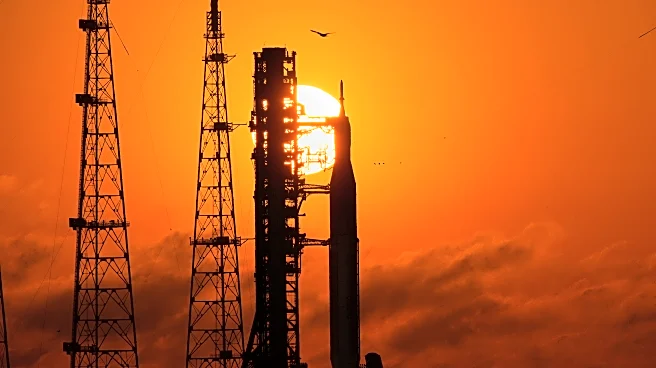
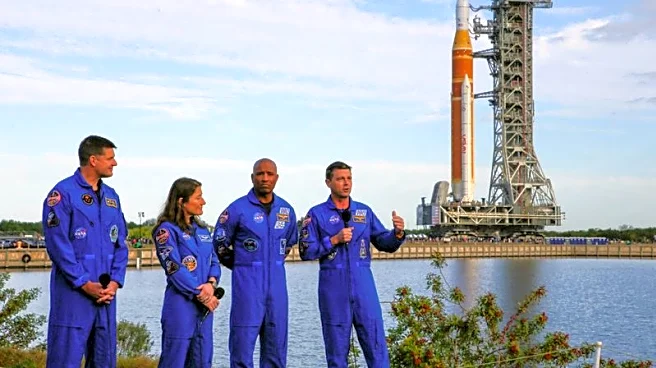
NASA astronaut Victor Glover is preparing for the Artemis 2 mission, which is set to launch no earlier than April 1. This mission will mark a significant milestone as Glover will become the first Black person to leave low Earth orbit. The Artemis 2 crew,
which includes NASA commander Reid Wiseman, NASA mission specialist Christina Koch, and Canadian Space Agency mission specialist Jeremy Hansen, aims to fly a 10-day mission around the moon. Glover, who has extensive experience as a pilot and astronaut, emphasizes the importance of sharing the mission's experience with diverse communities, particularly those who may not typically engage with space exploration. He reflects on the historical context of space missions and the need to address broader societal issues, drawing inspiration from the poem 'Whitey on the Moon' by Gil Scott-Heron.
Why It's Important?
The Artemis 2 mission represents a pivotal moment in space exploration, highlighting NASA's commitment to diversity and inclusion. By involving astronauts from varied backgrounds, the mission aims to inspire a wide range of communities and demonstrate that excellence in space exploration transcends race, gender, and nationality. This approach not only fosters unity but also encourages public interest and support for NASA's endeavors. The mission's success could pave the way for future lunar landings, such as Artemis 4, which is planned for 2028. The involvement of international partners, like the Canadian Space Agency, underscores the collaborative nature of modern space exploration.
What's Next?
Following the Artemis 2 mission, NASA plans to conduct Artemis 3, which will involve docking activities in low Earth orbit. If successful, these missions will set the stage for Artemis 4, which aims to land astronauts on the moon by 2028. The outcomes of these missions will likely influence future international collaborations and funding for space exploration. Additionally, the mission's emphasis on inclusivity may lead to increased efforts to engage underrepresented communities in STEM fields, potentially impacting educational and career opportunities in the U.S.
Beyond the Headlines
The Artemis 2 mission also raises questions about the allocation of resources and the role of space exploration in addressing terrestrial challenges. Glover's reflections on historical protests against space spending highlight ongoing debates about prioritizing space exploration over pressing social issues. This mission could prompt discussions about how space agencies can balance exploration with contributing to solutions for global challenges, such as poverty and inequality.