





What's Happening?
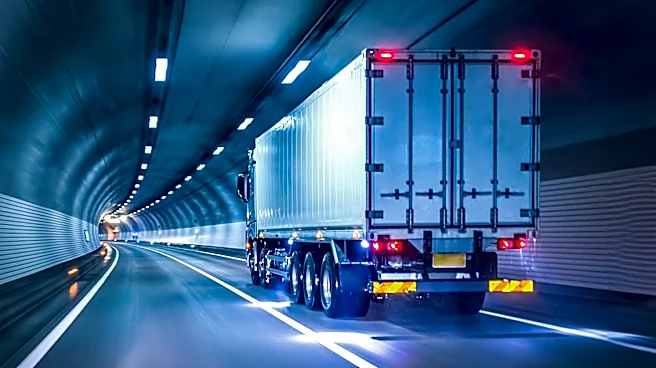
Several lanes of the Lincoln Tunnel were closed due to an overheight tractor-trailer striking the tunnel's infrastructure. The incident occurred on the eastbound side of the center tunnel, originating from Weehawken Township, New Jersey, and heading towards
New York City. The New Jersey Department of Transportation (NJ DOT) reported the closure via its traffic website, 511NJ, at approximately 6:48 a.m. All lanes were initially closed and detoured. The Port Authority's website indicated that vehicles traveling through the tunnel to Manhattan were experiencing delays of at least an hour. This disruption significantly impacted NJ Transit bus services, with dozens of buses reporting delays. By 9 a.m., the Port Authority announced that the truck had been cleared, but residual traffic delays were still expected.
Why It's Important?
The closure of Lincoln Tunnel lanes has a substantial impact on daily commuters and regional transportation in the tri-state area, particularly affecting those traveling from New Jersey to Manhattan. The Lincoln Tunnel is a critical artery for both commercial and passenger traffic, and its disruption can lead to widespread economic and social consequences. Businesses relying on timely deliveries or employee commutes face productivity losses due to extended travel times. For individuals, the delays translate to lost personal time, increased stress, and potential missed appointments or work hours. The incident highlights the vulnerability of major transportation infrastructure to unforeseen events and the ripple effect such disruptions can have on a densely populated and economically active region. The reliance on a few key transit points makes the area susceptible to significant slowdowns when even one is compromised.
What's Next?
Following the clearance of the tractor-trailer, authorities will focus on managing the residual traffic delays and restoring normal flow through the Lincoln Tunnel. Commuters are advised to check real-time traffic updates from sources like 511NJ and the Port Authority's website for the most current information on travel times and alternative routes. Transportation agencies will likely review the incident to assess any potential damage to the tunnel infrastructure and to evaluate protocols for handling overheight vehicles to prevent future occurrences. There may also be discussions regarding enhanced signage or enforcement measures for commercial vehicles approaching the tunnel. NJ Transit will continue to work on mitigating the impact on its bus schedules and informing passengers of ongoing delays.
Beyond the Headlines
This incident underscores the broader challenges faced by aging infrastructure in metropolitan areas and the constant pressure on transportation networks. The Lincoln Tunnel, like many other critical infrastructure components, handles immense daily traffic, making it susceptible to disruptions that can have far-reaching consequences beyond immediate traffic jams. The event also brings to light the economic cost of congestion and delays, which can amount to billions annually in lost productivity and increased operational costs for businesses. Furthermore, it highlights the need for continuous investment in infrastructure maintenance, upgrades, and smart traffic management systems to enhance resilience and minimize the impact of such events on urban mobility and economic activity. The incident serves as a reminder of the delicate balance required to keep major urban centers functioning efficiently.