


What's Happening?
Georgia Senator Jon Ossoff recently caused a stir within Trumpworld by mentioning a woman named 'Natalie' in a campaign speech. Ossoff stated that while military personnel are engaged in conflict, President Trump 'wants to build his ballroom and travel
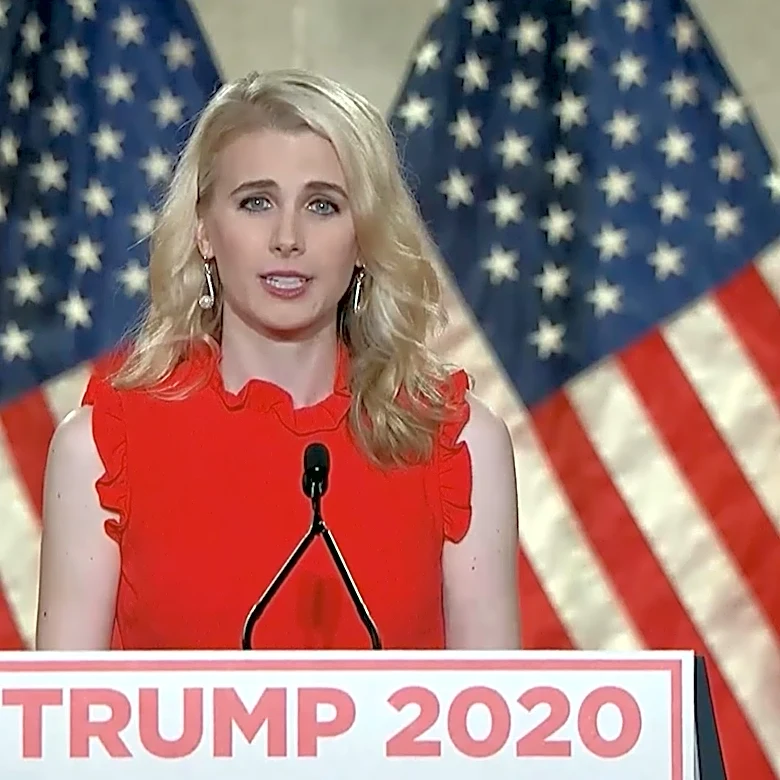
with Natalie on their apparently defenseless flying palace gifted by the emir of Qatar.' This reference is understood to be about Natalie Harp, an executive assistant in the White House, who is colloquially known as President Trump's 'human printer.' Harp's role involves following President Trump with a wireless printer to provide him with hard copies of articles and memes about himself, as President Trump reportedly prefers physical documents over digital formats. She also occasionally posts on social media for President Trump, with some team members attributing controversial posts to her. Harp earns a salary of $150,000 for this position and has been part of President Trump's staff since 2022, following a stint as an anchor at One America News Network.
Why It's Important?
The reaction from Trumpworld to Senator Ossoff's comment underscores the unusual dynamics and sensitivities within President Trump's inner circle. The strong, often vulgar, responses from White House communications director Steven Cheung and another staffer suggest that public references to Harp, particularly in a context implying impropriety or distraction, are perceived as a significant attack. This incident highlights the unique nature of Harp's role, which, despite its unconventional description, has reportedly ensured her continued employment due to her 'scarily devoted' loyalty to President Trump. Her position as a 'human printer' and social media proxy reveals President Trump's specific preferences for information consumption and communication, which deviates from modern digital practices. The controversy also brings to light the internal concerns among President Trump's staff regarding Harp's influence and potential for causing issues, indicating a complex and at times contentious working environment within the White House.
What's Next?
The immediate aftermath of Senator Ossoff's remarks has already seen a defensive reaction from President Trump's team, indicating that any further public scrutiny of Natalie Harp's role or relationship with President Trump will likely be met with similar pushback. Given Senator Ossoff's re-election campaign and his potential as a 2028 presidential contender, it is probable that his campaign will continue to leverage such observations to draw attention to President Trump's conduct and priorities. This incident may also prompt increased media attention on Harp's activities and influence within the White House, potentially leading to more detailed reports on her responsibilities and the internal dynamics of President Trump's staff. The ongoing public discourse could further solidify Harp's controversial 'human printer' moniker and her image as a figure whose loyalty to President Trump is both a strength and a point of contention.
Beyond the Headlines
Beyond the immediate political skirmish, this event sheds light on the broader implications of information control and personal loyalty within high-level political administrations. Natalie Harp's role as a 'human printer' symbolizes a deliberate choice by President Trump to maintain a specific, curated information flow, potentially insulating him from unfiltered news or critical perspectives. This preference for hard copies and personalized information delivery raises questions about decision-making processes and the potential for echo chambers within the executive branch. Furthermore, the intense loyalty displayed by Harp, described as 'scarily devoted,' highlights a cultural aspect of President Trump's political operation where personal allegiance can outweigh conventional professional expectations or concerns from other staff members. This dynamic could influence future political appointments and staff structures, emphasizing personal devotion over traditional qualifications or independent counsel, thereby shaping the operational ethos of political leadership.