



What's Happening?
Serbia's President Aleksandar Vučić announced the opening of an assembly factory for Israeli-made drones in the Balkan country. This initiative aims to significantly enhance Serbia's military capabilities. The factory is a collaboration between the Serbian
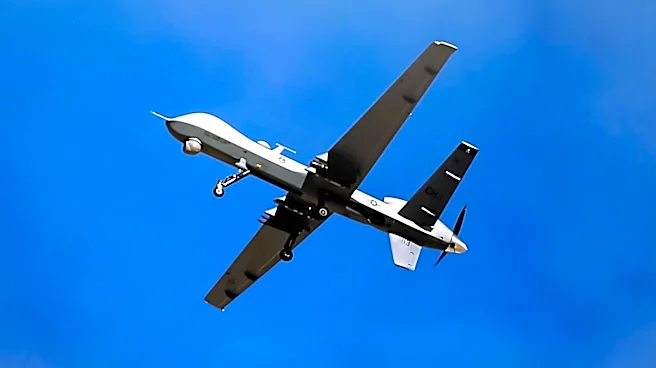
state arms producer Yugoimport SDPR and Israel's Elbit Systems. President Vučić stated that the new facility would create approximately 100 jobs and produce advanced equipment for both the Serbian military and the armed forces of other nations. While specific details about the factory remain confidential, Vučić expressed ambitious plans to open at least three more factories in Serbia in partnership with Israeli firms. He also mentioned that Serbia's Krusik weapons factory would be responsible for manufacturing warheads for these drones. Videos shared by the President showed him touring the factory and briefly operating a drone, highlighting its capabilities to pursue targets and navigate through confined spaces.
Why It's Important?
This development is significant for Serbia's defense strategy and its geopolitical positioning. By establishing domestic drone production capabilities with Israeli technology, Serbia aims to modernize its military fleet and reduce reliance on external suppliers for critical defense assets. This move could bolster Serbia's military strength in the Balkan region, potentially altering regional power dynamics. Furthermore, the collaboration with Israel signifies a diversification of Serbia's defense partnerships, as it has historically acquired military equipment from China and Russia while also pursuing European Union membership. The creation of new jobs and the potential for further industrial expansion with Israeli firms could also provide an economic boost to Serbia. For the U.S. and its allies, this development warrants attention as it indicates Serbia's continued efforts to balance its relationships with various global powers while enhancing its defense autonomy. The export potential of these drones to other countries could also have broader implications for regional security and arms proliferation.
What's Next?
Serbia plans to open at least three additional factories in partnership with Israeli firms, indicating a sustained effort to expand its defense industrial base. The Krusik weapons factory will continue to manufacture warheads for the drones, suggesting an integrated domestic supply chain for these military assets. President Vučić is currently facing an early parliamentary election on October 25, which will test his political influence. The outcome of this election could influence the pace and direction of these defense initiatives. Serbia will likely continue its strategy of acquiring military equipment from diverse international partners, including France (Rafale jets), China, and Russia, while simultaneously pursuing EU membership. This multi-faceted approach suggests that Serbia will strive to maintain its strategic independence and enhance its military capabilities through various avenues, balancing its geopolitical interests.
Beyond the Headlines
The establishment of an Israeli drone assembly factory in Serbia carries deeper implications beyond immediate military enhancement. It highlights the growing trend of smaller nations seeking to develop indigenous defense capabilities through international partnerships, thereby reducing dependence on major powers. This strategy allows countries like Serbia to project greater autonomy and influence in their respective regions. The confidentiality surrounding the production process, as noted by President Vučić, underscores the sensitive nature of military technology transfer and the strategic importance placed on these capabilities. Ethically, the production and potential export of advanced combat drones raise questions about their use in future conflicts and the responsibility of the manufacturing nations. Legally, such collaborations must navigate international arms control regulations and export restrictions. Culturally, the development of a domestic defense industry can foster national pride and a sense of self-reliance, but it also risks escalating regional arms races if not managed carefully. This move reflects a complex interplay of national security, economic development, and international relations in a volatile geopolitical landscape.