
What's Happening?
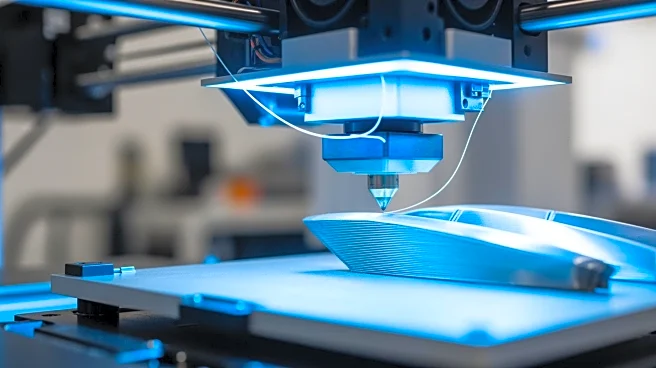
The Naval Air Systems Command (NAVAIR) is enhancing military readiness through the use of additive manufacturing (AM) to produce aircraft parts. This technology allows for the 'printing' of replacement
parts by building materials layer by layer, which is particularly beneficial when parts are non-procurable or have long lead times. Recently, maintainers from Marine Aircraft Logistics Squadron 36 and the 18th Maintenance Group used AM to repair an F-15 Eagle's cockpit cooling duct at Kadena Air Base, Japan. The repair, which would have grounded the aircraft for months, was completed in hours. This collaboration not only expedited the repair but also led to an improved design that reduced print time. The success of this initiative highlights the potential of AM to serve as a force multiplier in military operations.
Why It's Important?
The use of additive manufacturing in military operations represents a significant advancement in logistics and maintenance capabilities. By enabling rapid production of parts on-site, AM reduces dependency on traditional supply chains, which can be slow and unreliable in contested environments. This capability enhances operational readiness and reduces downtime for critical military assets. The collaboration between different military branches also fosters innovation and efficiency, as seen in the improved design of the F-15 part. The integration of AM into military logistics could lead to broader adoption across various sectors, potentially transforming how the military approaches maintenance and supply chain management.
What's Next?
The success of this initiative is likely to encourage further integration of additive manufacturing in military operations. As the technology becomes more widespread, it is expected that more parts will be produced using AM, reducing reliance on traditional manufacturing processes. The Air Force's technical publications now include the new printing requirements for the F-15 duct, setting a precedent for future repairs. Additionally, the collaboration between the Air Force and Marine Corps may serve as a model for other branches, promoting cross-service cooperation and innovation. The continued development and refinement of AM processes will be crucial in maximizing its potential benefits.