
What's Happening?
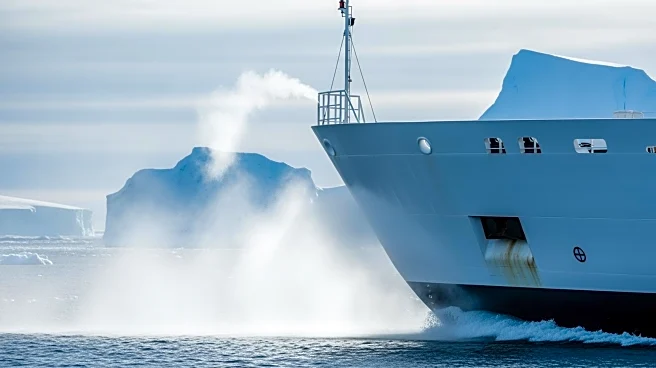
As global temperatures rise, the melting of Arctic sea ice has opened new shipping routes, leading to increased marine traffic in the region. This surge in activity has resulted in higher emissions of black
carbon, a pollutant that accelerates ice melt by reducing the ice's ability to reflect sunlight. In response, several countries, including France, Germany, the Solomon Islands, and Denmark, have proposed that the International Maritime Organization (IMO) mandate the use of cleaner 'polar fuels' for ships operating in Arctic waters. This proposal aims to reduce the environmental impact of shipping in the Arctic, which is warming faster than any other region on Earth. The proposal is set to be discussed by the IMO's Pollution Prevention and Response Committee, with potential further discussions in April.
Why It's Important?
The increase in black carbon emissions from Arctic shipping poses significant environmental risks, contributing to a cycle of accelerated warming and ice melt. This not only affects the Arctic ecosystem but also has broader implications for global weather patterns. The push for cleaner fuels is crucial in mitigating these impacts. However, geopolitical tensions, particularly those involving President Trump's past comments on Greenland and his administration's stance on climate policies, complicate international efforts to regulate emissions. The outcome of these discussions could influence global shipping practices and environmental policies, impacting industries reliant on Arctic routes and the broader fight against climate change.
What's Next?
The proposal for cleaner fuels in Arctic shipping will be reviewed by the IMO, with discussions expected to continue in upcoming meetings. The outcome will depend on the willingness of Arctic nations and the shipping industry to adopt stricter regulations. Internal tensions within countries, such as Iceland, where the fishing industry holds significant influence, may affect national positions on the proposal. The international community will be watching closely, as the decision could set a precedent for future environmental regulations in the Arctic and beyond.
Beyond the Headlines
The debate over Arctic shipping fuels highlights the complex interplay between environmental concerns and economic interests. While cleaner fuels could reduce emissions, they may also increase operational costs for shipping companies, potentially affecting global trade dynamics. Additionally, the geopolitical aspects of Arctic sovereignty and resource exploitation add layers of complexity to the issue. The situation underscores the need for a balanced approach that considers both environmental sustainability and economic viability.