




What's Happening?
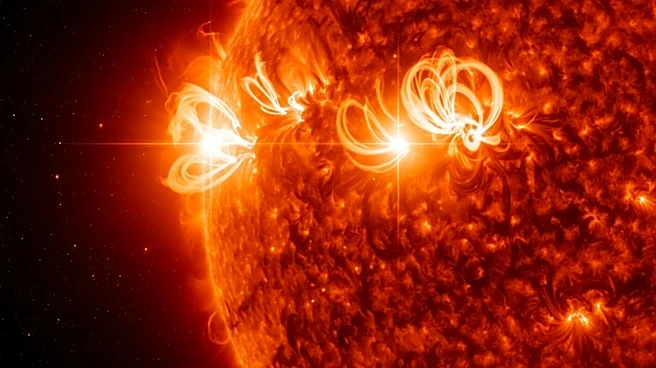
The Sun has released two strong solar flares, with the first peaking at 9:07 p.m. ET on April 23 and the second at 4:13 a.m. ET on April 24. These flares were captured by NASA's Solar Dynamics Observatory, which monitors the Sun's activity. The flares are classified
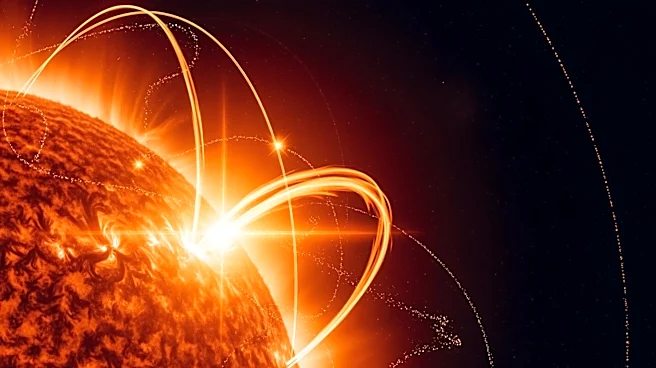
as X2.4 and X2.5, indicating their intensity. Solar flares are powerful bursts of energy that can affect radio communications, power grids, navigation signals, and pose risks to spacecraft and astronauts. NASA continues to study these events to understand their impact on Earth and space weather.
Why It's Important?
Solar flares have significant implications for technology and infrastructure on Earth, as well as for space missions. Understanding and predicting solar activity is crucial for mitigating potential disruptions to communication systems and power grids. The study of solar flares also contributes to the safety of astronauts and spacecraft operating in space. NASA's ongoing research into solar phenomena helps improve space weather forecasting, which is essential for protecting both terrestrial and space-based technologies.