






What's Happening?
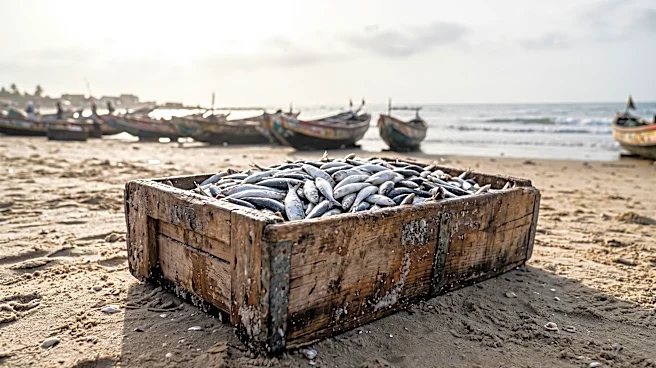
The global demand for fish meal, a protein-rich product made from raw fish and byproducts, is increasingly diverting vast quantities of fish from human consumption, particularly in West Africa, to feed livestock, farmed fish, and pets in Europe and China.
Journalist Rose George, in an excerpt from her book 'Every Last Fish: A Deep Dive into the World of Fishes and Fishing,' highlights how staple fish species like anchovies, sardines, and herring, which could feed millions of Africans, are instead processed into fish meal. This industry, rebranded as 'marine ingredients,' is driven by foreign factories that outbid local fish processors, often leading to unsustainable fishing practices and environmental pollution. In countries like Senegal, The Gambia, and Mauritania, local fishermen supply these factories due to better pay, despite the long-term consequences for food security and marine ecosystems.
Why It's Important?
This issue has significant implications for global food security, economic equity, and environmental sustainability. It exposes a critical imbalance where the demand for animal feed and luxury food products in wealthier nations takes precedence over the nutritional needs of vulnerable populations. The diversion of fish resources exacerbates food insecurity in West African communities that rely on these fish as a primary source of protein. Economically, it creates a dependency on foreign-owned fish meal factories, often at the expense of local artisanal fishing and processing industries. Environmentally, the intensive fishing required to meet fish meal demand leads to overfishing, depletion of marine stocks, and ecosystem degradation, threatening the long-term viability of fisheries and the livelihoods they support. The lack of traceability and transparency in the supply chain further complicates efforts to address these issues.
What's Next?
Addressing this complex issue will require multi-faceted approaches. International organizations and governments may need to implement stricter regulations on the fish meal industry, focusing on traceability, sustainable sourcing, and ensuring that fish suitable for human consumption are prioritized for local markets. There could be increased pressure on European retailers and other buyers to verify the ethical and sustainable origins of their 'marine ingredients.' Local governments in West Africa might explore policies to support artisanal fisheries and processors, potentially through subsidies or market protections, to enable them to compete with fish meal factories. Additionally, consumer awareness campaigns in Europe and China could highlight the social and environmental costs of fish meal production, encouraging demand for more sustainably sourced animal feed alternatives or a reduction in the consumption of farmed fish and meat that rely on fish meal.
Beyond the Headlines
The situation in West Africa with fish meal production highlights a broader ethical dilemma concerning resource allocation in a globalized economy. It exposes how market forces, driven by demand from affluent regions, can disproportionately impact developing nations, leading to a form of 'resource colonialism' where local resources are extracted for external benefit. This raises questions about global food justice and the responsibility of developed nations and corporations to ensure equitable access to food and sustainable practices worldwide. The rebranding of 'fishmeal and fish oil' to 'marine ingredients' also points to a deliberate effort to obscure the origins and implications of these products, underscoring the need for greater transparency and accountability in global supply chains. Ultimately, this issue challenges consumers and policymakers to confront the hidden costs of their consumption patterns and advocate for systems that prioritize human well-being and ecological health over profit.