







What's Happening?
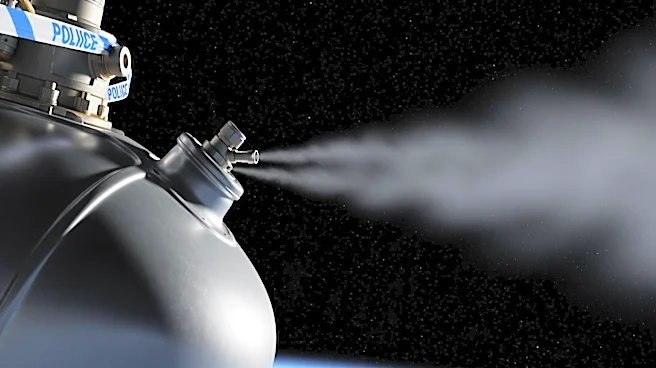
NASA has identified a helium leak in the Orion spacecraft's propulsion system during the Artemis II mission. The leak, which is internal to the system, affects the helium pressure supply to the oxidizer side of the spacecraft's propulsion system. Despite
this issue, the propulsion system has performed nominally, and the leak does not pose a threat to the mission's reentry or crew safety. The leak was discovered as the Artemis II mission, which includes a lunar flyby, was nearing its return to Earth. NASA's lead flight director, Jeff Radigan, stated that the leak is not to space but is contained within the system's valves. The European-built service module, which houses the valves, will be jettisoned before reentry, and the crew module will guide the astronauts to a safe splashdown in the Pacific Ocean. NASA plans to redesign the valves for future missions to prevent similar issues.
Why It's Important?
The helium leak in the Orion spacecraft highlights the challenges of space exploration and the importance of ensuring the reliability of spacecraft systems. While the leak does not currently threaten the Artemis II mission, it underscores the need for thorough testing and redesign to ensure the safety and success of future missions. The Artemis program is a critical component of NASA's efforts to return humans to the Moon and eventually send astronauts to Mars. Addressing technical issues like the helium leak is essential for maintaining the program's timeline and objectives. The successful resolution of such issues will bolster confidence in NASA's ability to conduct complex space missions and advance human space exploration.
What's Next?
NASA will conduct a detailed analysis of the helium leak to determine the necessary modifications for future missions. The redesign of the valves will be prioritized to prevent similar issues in upcoming Artemis missions. As the Artemis program progresses, NASA will continue to refine and improve the Orion spacecraft's systems to ensure mission success and crew safety. The lessons learned from the Artemis II mission will inform the planning and execution of Artemis III and subsequent missions, which aim to establish a sustainable human presence on the Moon.