





What's Happening?
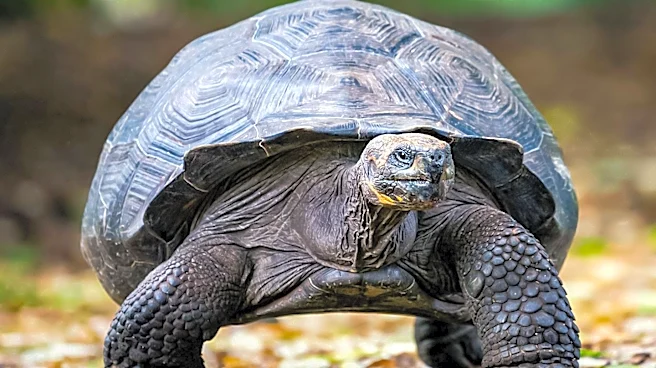
Yale researchers have successfully identified two previously extinct lineages of giant tortoises from the Galapagos Islands. This discovery was made possible through a novel computational approach that analyzed highly degraded DNA from historical museum
specimens. The team, led by Alexander Ochoa and Adalgisa Caccone, developed methods to reconstruct genetic relationships from fragmented genetic information, even when less than 1% of the genome was readable. This technique allowed them to overcome the limitations typically associated with ancient, degraded DNA samples. The research involved extracting DNA from dried bones of five museum specimens belonging to these extinct lineages and then superimposing this information onto a reference phylogenetic tree built from high-quality genomes of living and other historical tortoises. The findings are published in the journal Proceedings of the Royal Society B.
Why It's Important?
This breakthrough in analyzing degraded DNA has significant implications for conservation efforts and understanding evolutionary history. The ability to extract meaningful genetic information from historically challenging samples opens new avenues for studying extinct species and their genetic diversity. For the Galapagos giant tortoises, this research provides crucial insights into their evolutionary past and could directly inform ongoing conservation programs. The study highlights that the genomes of extinct lineages might still persist in extant, hybrid tortoises due to historical human-driven migration events. Therefore, captive breeding programs could potentially recover the genomes of these lost lineages in future generations, contributing to the genetic resilience and biodiversity of the Galapagos ecosystem. This methodology could be broadly applied to other wildlife conservation initiatives facing similar challenges with limited or degraded genetic material.
What's Next?
The computational tools developed by the Yale researchers are expected to be applied to broader wildlife conservation efforts beyond the Galapagos tortoises. The identification of these extinct lineages suggests that future conservation strategies could focus on identifying and utilizing hybrid tortoises that carry genetic material from the lost populations. This could involve targeted breeding programs aimed at reintroducing or strengthening the genetic diversity of current tortoise populations. Further research will likely explore the extent to which these extinct genes are present in living tortoises and how they can be effectively integrated into conservation plans. The success of this method also paves the way for re-examining other museum specimens previously deemed too degraded for genetic analysis, potentially uncovering more lost lineages and enriching our understanding of biodiversity.
Beyond the Headlines
The ethical and scientific implications of this research extend beyond immediate conservation. The ability to 'resurrect' genetic information from extinct species raises questions about de-extinction possibilities, albeit in a limited form through existing hybrids. It underscores the profound impact of human activities, such as historical translocations of tortoises, on genetic landscapes and the long-term consequences for species survival. This study also highlights the invaluable role of museum collections as reservoirs of genetic information, emphasizing the importance of preserving such specimens for future scientific advancements. The innovative computational approach represents a significant leap in paleogenomics, pushing the boundaries of what can be learned from ancient biological material and offering a powerful tool for understanding and mitigating biodiversity loss in an era of rapid environmental change.