

What's Happening?
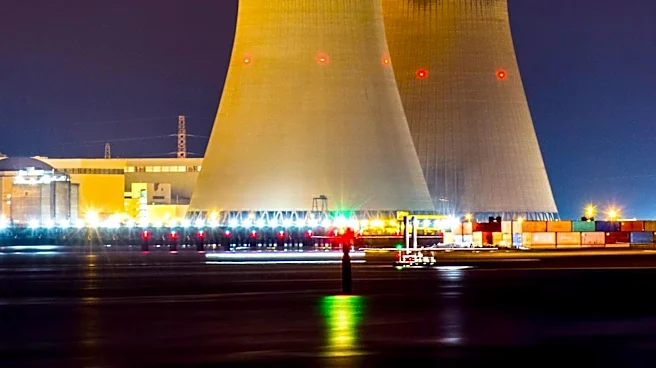
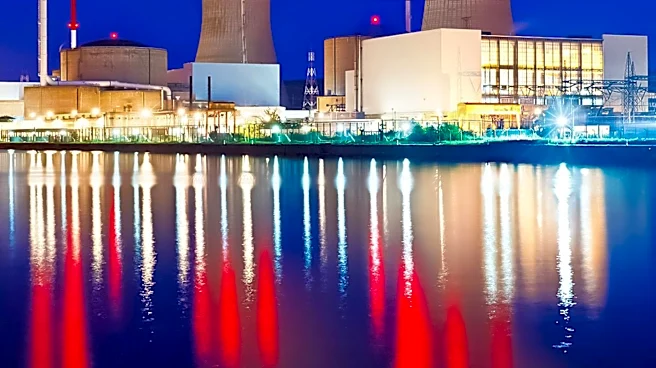
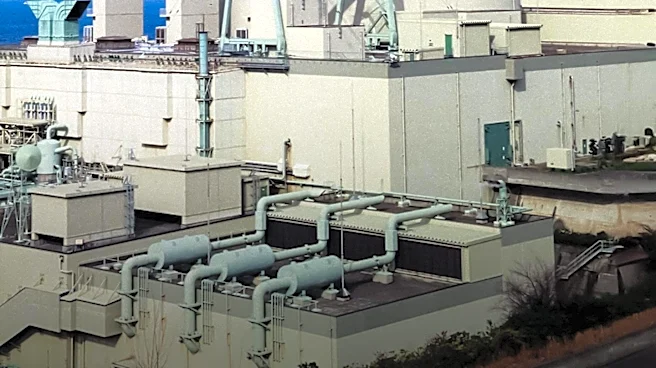
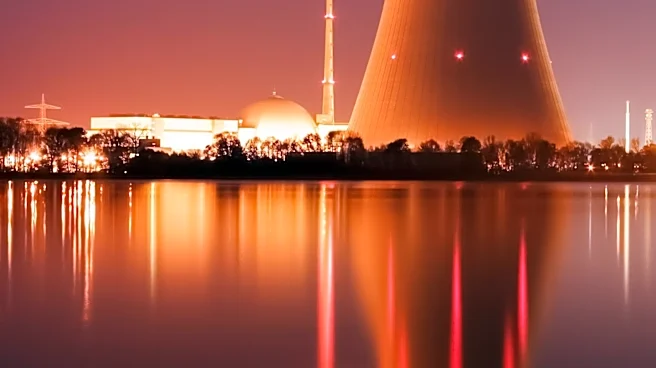
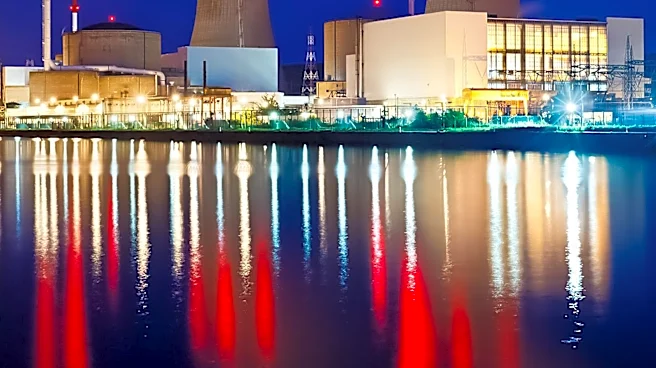
France has shut down three additional nuclear reactors due to reduced water flows in the Meuse and Moselle rivers, exacerbating concerns over electricity supply amid ongoing heatwaves and droughts in Europe. The French energy company EDF closed two reactors at the Chooz
nuclear power plant and one at the Cattenom facility. These closures follow earlier shutdowns in July, as the reactors rely on river water for cooling. The decision aligns with a Franco-Belgian agreement to maintain sufficient water flows in the Meuse River. The heatwave has also affected other European countries, with Hungary narrowly avoiding a complete shutdown of its only nuclear plant due to low water levels in the Danube River.
Why It's Important?
The shutdown of nuclear reactors in France highlights the vulnerability of energy infrastructure to climate-induced water shortages. As nuclear power plants require significant water for cooling, reduced river flows can lead to operational constraints, impacting electricity supply. This situation underscores the broader challenge of maintaining energy security in the face of climate change. The reliance on nuclear power in France, which generates about 70% of its electricity from nuclear reactors, means that such disruptions can have significant implications for energy availability and pricing. The situation also raises questions about the resilience of energy systems and the need for adaptive strategies to cope with environmental changes.
What's Next?
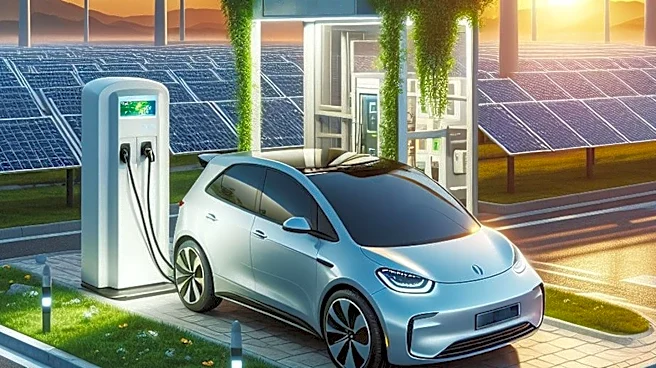
The ongoing heatwave and drought conditions in Europe are likely to continue affecting nuclear and hydropower generation, potentially leading to further electricity supply challenges. Countries may need to explore alternative energy sources or increase imports to meet demand. Additionally, there may be increased pressure on governments and energy companies to invest in infrastructure that can withstand climate variability. The situation could also prompt discussions on the diversification of energy sources and the integration of more renewable energy into national grids to enhance resilience.