



What's Happening?
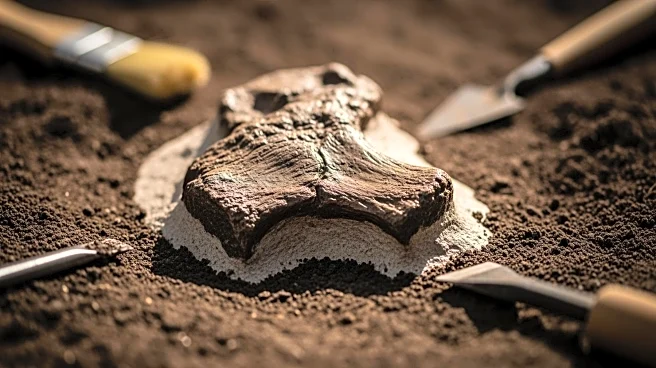
In a significant development, the United Kingdom's National Crime Agency seized dinosaur fossils valued at £12 million ($15.6 million) in November. These fossils, including a pair of Allosaurus and a Stegosaurus skeleton, were linked to Binghai Su, a Chinese
national involved in a major money-laundering case in Singapore. Although Su was not charged in the Singapore case, he agreed to forfeit the fossils and other assets in a settlement with British authorities. The fossils were originally acquired from Christie's Jurassic Icons auction in London in 2024. The agency plans to sell the seized items, which also include nine London apartments and several Chinese artworks. This incident is part of a broader trend of high-profile fossil sales and legal disputes, highlighting the growing interest in dinosaur fossils among collectors and the ethical issues surrounding their trade.
Why It's Important?
The seizure of these valuable dinosaur fossils underscores the complex intersection of art, commerce, and legality. The high prices fetched by such fossils at auctions reflect a booming market driven by wealthy collectors and institutions. However, this trend raises ethical concerns about the privatization of scientific artifacts and the potential loss of public access to important paleontological specimens. The case also highlights the need for stricter regulations to prevent illegal trade and ensure that fossils are preserved for scientific study and public education. The involvement of a major money-laundering case further complicates the narrative, suggesting that the art and fossil markets can be vulnerable to exploitation by individuals seeking to launder illicit funds.
What's Next?
The National Crime Agency's decision to sell the seized fossils and other assets will likely attract significant attention from collectors and institutions. The outcome of these sales could influence future regulations and policies regarding the trade of fossils and other cultural artifacts. Additionally, the case may prompt further scrutiny of the provenance of fossils and the ethical implications of their sale. As the market for dinosaur fossils continues to grow, stakeholders, including paleontologists and legal experts, may advocate for more stringent international guidelines to protect these ancient treasures from commercial exploitation.
Beyond the Headlines
The growing market for dinosaur fossils raises broader questions about the role of private collectors in the preservation of natural history. While private ownership can lead to increased interest and investment in paleontology, it also risks limiting scientific access to important specimens. The ethical debate centers on whether fossils should remain in public trusts to ensure they are available for research and education. The case also highlights the potential for cultural and legal conflicts when fossils are traded across international borders, emphasizing the need for a global consensus on fossil trade regulations.