





What's Happening?
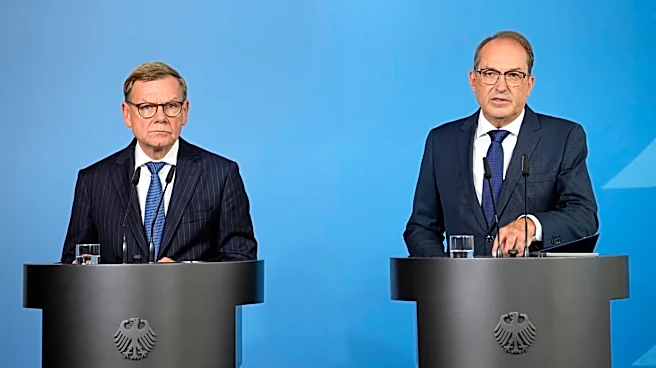
Five European Union nations—Denmark, Greece, Austria, Germany, and the Netherlands—have agreed on a model for 'return hubs' in non-EU countries and aim to begin sending rejected migrants to these facilities as early as 2027. Rwanda has expressed interest
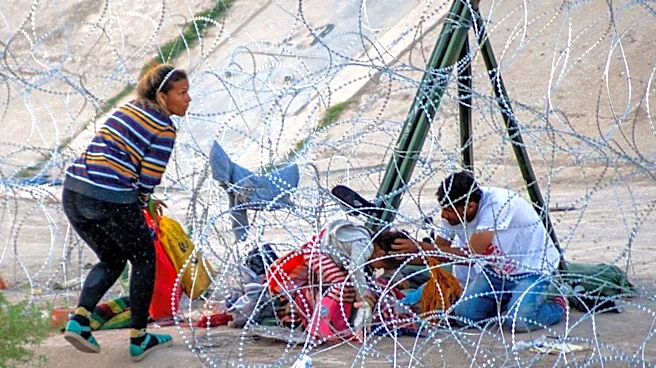
in hosting these hubs, with its government spokesperson, Yolande Makolo, citing an existing emergency transit mechanism in Gashora for people evacuated from Libya as a precedent. The proposed hubs are intended to provide a safe environment where migrants can receive medical care, training, and rest while their asylum applications are processed. The goal is for migrants to either return to their home countries if safe or be resettled in other third countries. This initiative follows a June vote by European lawmakers to allow member states to establish such centers outside the EU. Human rights groups have criticized these plans, raising concerns about the guarantee of migrants' rights in third countries.
Why It's Important?
This development signifies a significant shift in European migration policy, moving towards externalizing asylum processing and migrant management. If successful, these 'return hubs' could fundamentally alter how the EU handles irregular migration and rejected asylum seekers, potentially reducing the number of migrants within EU borders. For the participating EU nations, it represents an attempt to address public and political pressure for tougher measures against irregular migration. However, the initiative faces strong opposition from human rights organizations, which argue that it could create 'human rights black holes' where monitoring and enforcement of international law are difficult. The success or failure of these hubs will have profound implications for international human rights standards, the future of asylum law, and the relationship between EU and non-EU countries involved in migration management. The model could also set a precedent for other nations grappling with similar migration challenges.
What's Next?
The five EU nations anticipate reaching their first agreement with a partner country by early 2027, with Rwanda being a prominent possibility. Technical talks and missions to potential partner countries will be conducted to assess human rights situations and living conditions for refugees, as stated by Bart van den Brink, the Netherlands’ minister of asylum and migration. The International Organization for Migration (IOM) and the U.N. Refugee Agency (UNHCR) have indicated that discussions are exploratory, and they have not yet been approached with specific details of the proposals. Their involvement, if any, would be crucial for monitoring the centers and ensuring compliance with international standards. Human rights groups are expected to continue their advocacy against these plans, potentially leading to legal challenges and increased scrutiny of the conditions within any established 'return hubs.'
Beyond the Headlines
The concept of 'return hubs' raises complex ethical and legal questions regarding the extraterritorial application of human rights law and the responsibility of states towards asylum seekers. Critics argue that outsourcing migration control could lead to a dilution of accountability and create a system where vulnerable individuals are placed in situations where their rights are not adequately protected. The financial and political incentives for non-EU countries to host these hubs remain unclear, and the long-term implications for their sovereignty and international standing are yet to be fully understood. This approach also reflects a broader global trend of developed nations seeking to manage migration flows by shifting responsibilities to developing countries, potentially creating a two-tiered system of asylum processing. The debate over these hubs highlights the tension between national sovereignty, humanitarian obligations, and the practical challenges of managing global migration.