







What's Happening?
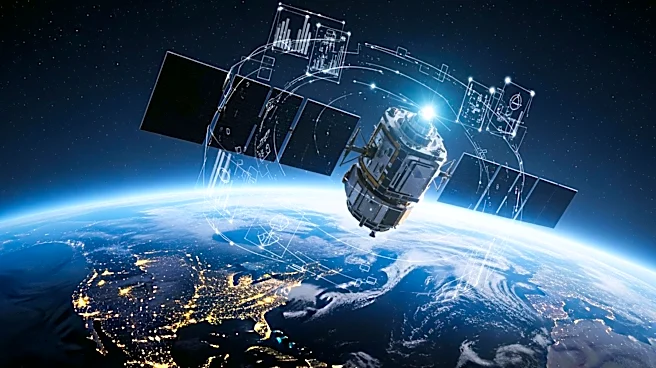
NASA has successfully deployed its Prithvi AI model in orbit, marking the first use of a geospatial foundation model on in-orbit platforms. Trained on 13 years of data from NASA's Landsat and ESA's Sentinel-2 satellites, Prithvi performed advanced analyses,
including predicting burn scars from the Gifford Fire. The model operated aboard the South Australian government's Kanyini satellite and the International Space Station's IMAGIN-e payload. Prithvi's open-source nature allows for widespread use and adaptation, accelerating scientific and technological development. This deployment enhances real-time environmental analysis capabilities, allowing data processing before it reaches Earth.
Why It's Important?
The deployment of Prithvi represents a significant advancement in the use of AI for Earth observation, enabling faster and more efficient data analysis. This capability is crucial for timely disaster assessment and environmental monitoring, potentially improving response times and decision-making in critical situations. The open-source model encourages collaboration and innovation, allowing researchers and developers to build upon NASA's work. This approach aligns with NASA's strategy to enhance scientific progress through accessible technology, setting a precedent for future AI applications in space exploration and Earth observation.