




What's Happening?
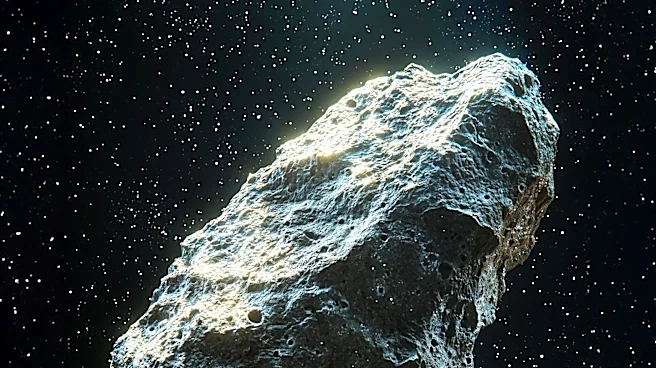
A new study led by Brandon Johnson at Purdue University reveals that the asteroid impact 66 million years ago caused a global firestorm, contributing to the extinction of the dinosaurs. The research, published in the Journal of Geophysical Research: Biogeosciences,
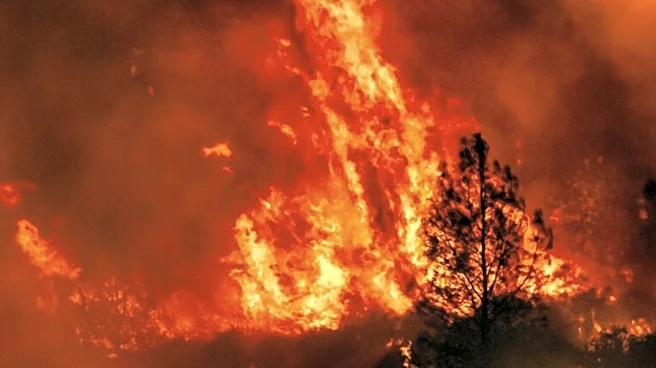
indicates that the impact vaporized a significant amount of rock, creating a dust cloud that enveloped the planet. This cloud trapped heat, leading to intense thermal radiation and widespread fires. The study challenges previous theories that focused on a 'nuclear winter' effect, suggesting instead that the immediate thermal impact played a crucial role in the mass extinction.
Why It's Important?
This research provides a deeper understanding of the events that led to one of Earth's most significant extinction events. By highlighting the role of thermal radiation and global fires, the study offers new perspectives on how asteroid impacts can affect planetary ecosystems. These insights are crucial for developing strategies to mitigate the effects of potential future impacts. The findings also contribute to the broader scientific understanding of mass extinctions and their causes, which can inform current discussions on biodiversity and climate change.
What's Next?
The study opens up new avenues for research into the long-term climatic and ecological effects of asteroid impacts. Scientists may explore similar events in Earth's history to better understand the resilience of life and the factors that contribute to mass extinctions. The findings could also influence policy discussions on planetary defense and the importance of monitoring near-Earth objects. As the scientific community continues to investigate these phenomena, the study underscores the need for interdisciplinary collaboration in understanding and preparing for potential global threats.